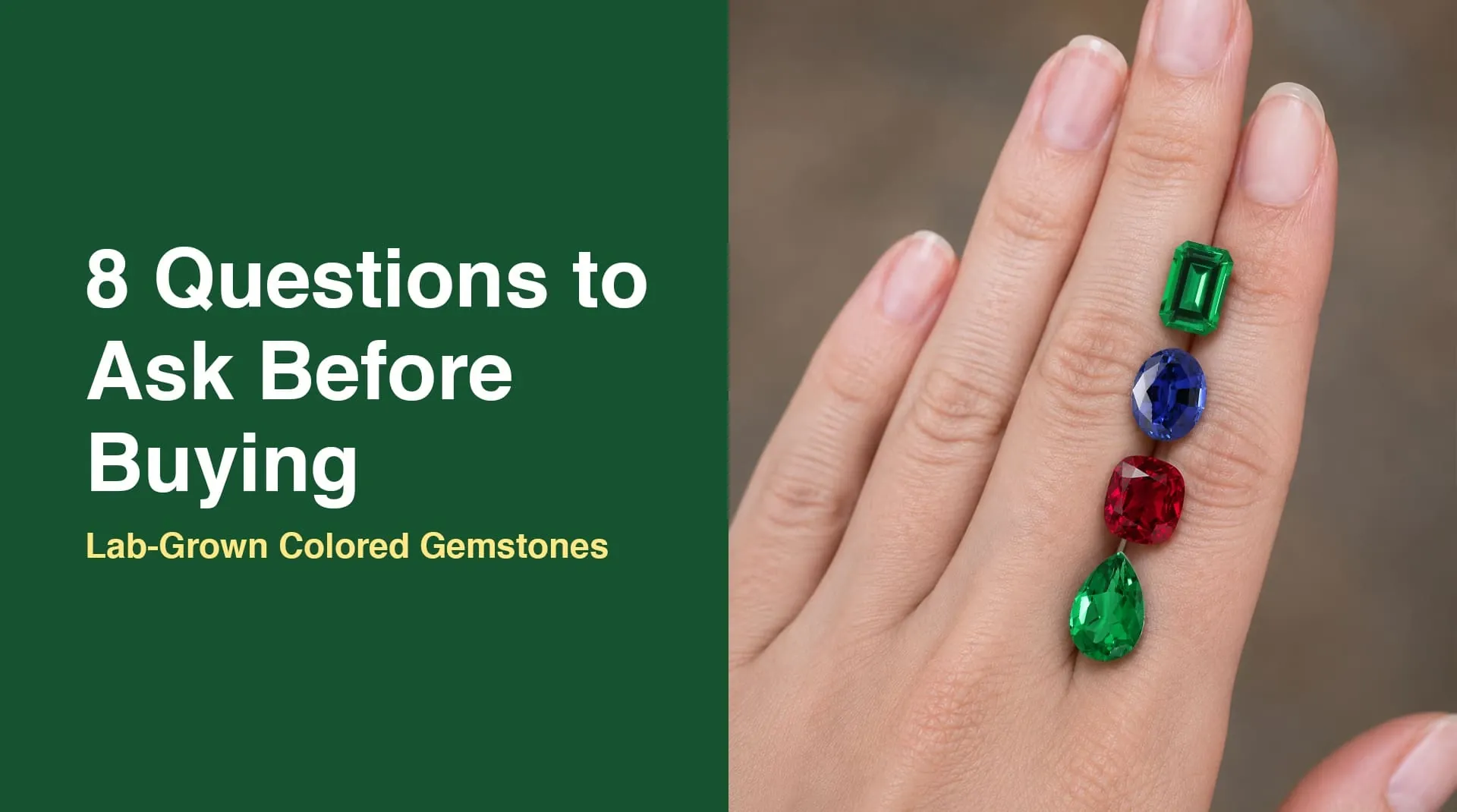
8 Questions to Ask Before Buying a Lab Grown Colored Gemstone
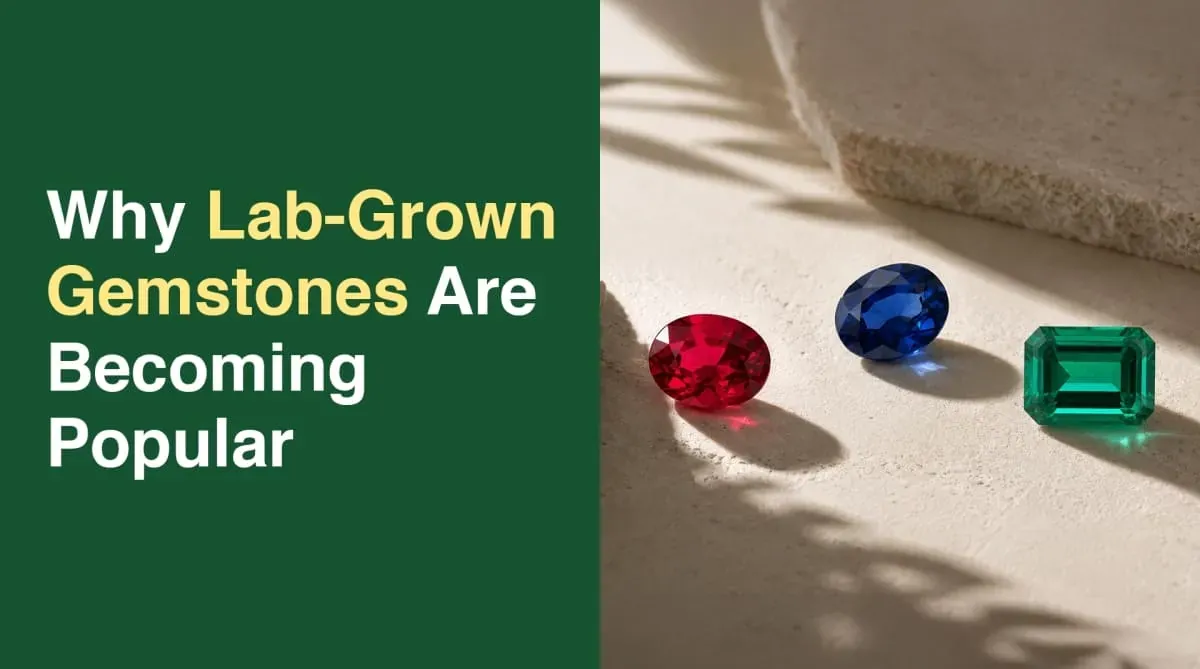
Lab-grown emeralds, rubies, and sapphires have become popular choices in fine jewelry. They have the same chemical, physical, and optical properties as top-quality natural gems, but cost much less. However, not all lab-grown stones are the same. Two stones with similar labels—like lab-grown, synthetic, or lab-created can be very different in how they were made, whether they were treated, and how clearly that information is shared with you.
Before you buy a lab-grown colored gemstone—whether it's a loose stone for a custom piece or finished jewelry—these eight questions can help you spot a quality, well-documented gem instead of one that falls short. These questions are useful for private buyers, jewelry designers, and retailers alike.
1. Is It Lab Grown, Simulated, or a Genuine Gemstone?
It's important to understand the terms, since this is where confusion often starts. In the gemstone trade, lab-grown, synthetic, lab-created, and created all mean the same thing. They refer to real gemstones that are chemically and optically identical to the best natural stones, but made in a lab instead of underground. Lab-created gems are not imitations they are real crystals with real hardness and shine.
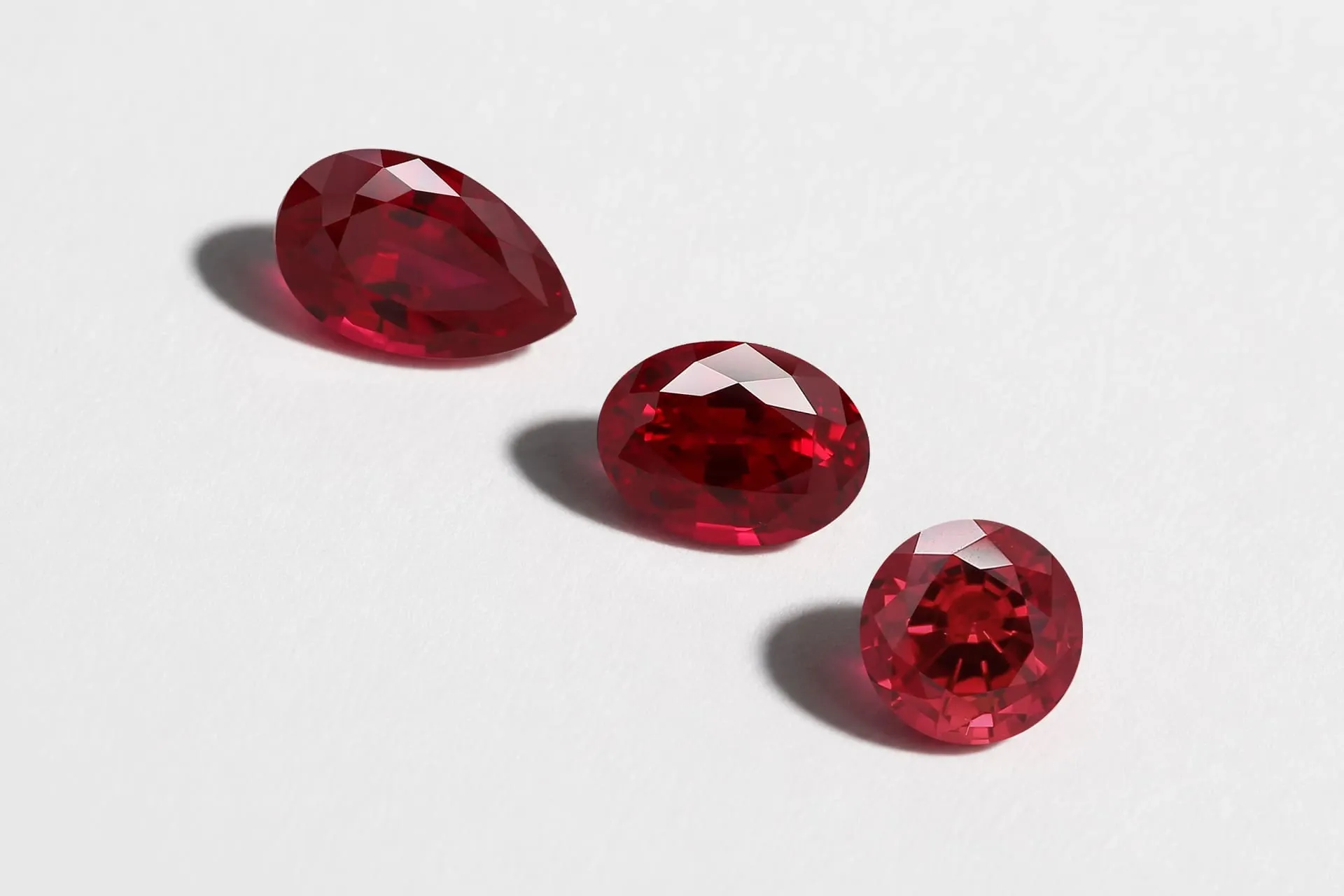
A lab-grown ruby sometimes called a synthetic ruby is a real ruby. A synthetic emerald is a real emerald, made from the same beryl mineral. A lab-grown sapphire, also known as a synthetic or created sapphire, is a real sapphire from the same corundum family as ruby. All three have the same crystal structure as their natural counterparts; the only difference is how they were grown.
A simulant is something else entirely. It could be cubic zirconia, colored glass, or a doublet made to look like an emerald, ruby, or sapphire, but it has a different chemical makeup, hardness, and value. Simulants are less expensive, softer, and usually easy for a gemologist to spot. Before buying, ask if you are being offered a lab-grown gemstone or a simulant. A reliable seller will give you a clear answer and put it in writing.
2. How Was the Gemstone Grown?
Not all growing methods are the same, and the differences are more important than many buyers think. Some methods focus on speed and low cost, creating a crystal in just a few hours. Others take months and try to copy the slower, natural way gemstones form. Here’s a look at the main methods:
- Flame Fusion (Verneuil Method) is the fastest, most affordable way to produce synthetic corundum; powdered chemicals are melted in a flame and deposited onto a rotating rod, forming a crystal in hours. Under magnification, these stones often show curved growth lines or small gas bubbles.
- Flux Growth a slower process, taking months, in which temperature and chemistry are carefully controlled. Hence, the crystal grows around a seed in its natural shape, producing a result more closely resembling fine gem-quality material.
Hydrothermal Growth a closely related slow-growth method, especially common for emerald, that likewise takes months rather than hours.Since flux and hydrothermal growth take much longer to produce a finished crystal, a sapphire made this way usually costs more than one made by flame fusion. Lab-grown corundum prices can vary widely depending on the method used. Ask which method was used—it tells you a lot about what you’re paying for.
3. Does It Come With an Independent Grading Report?
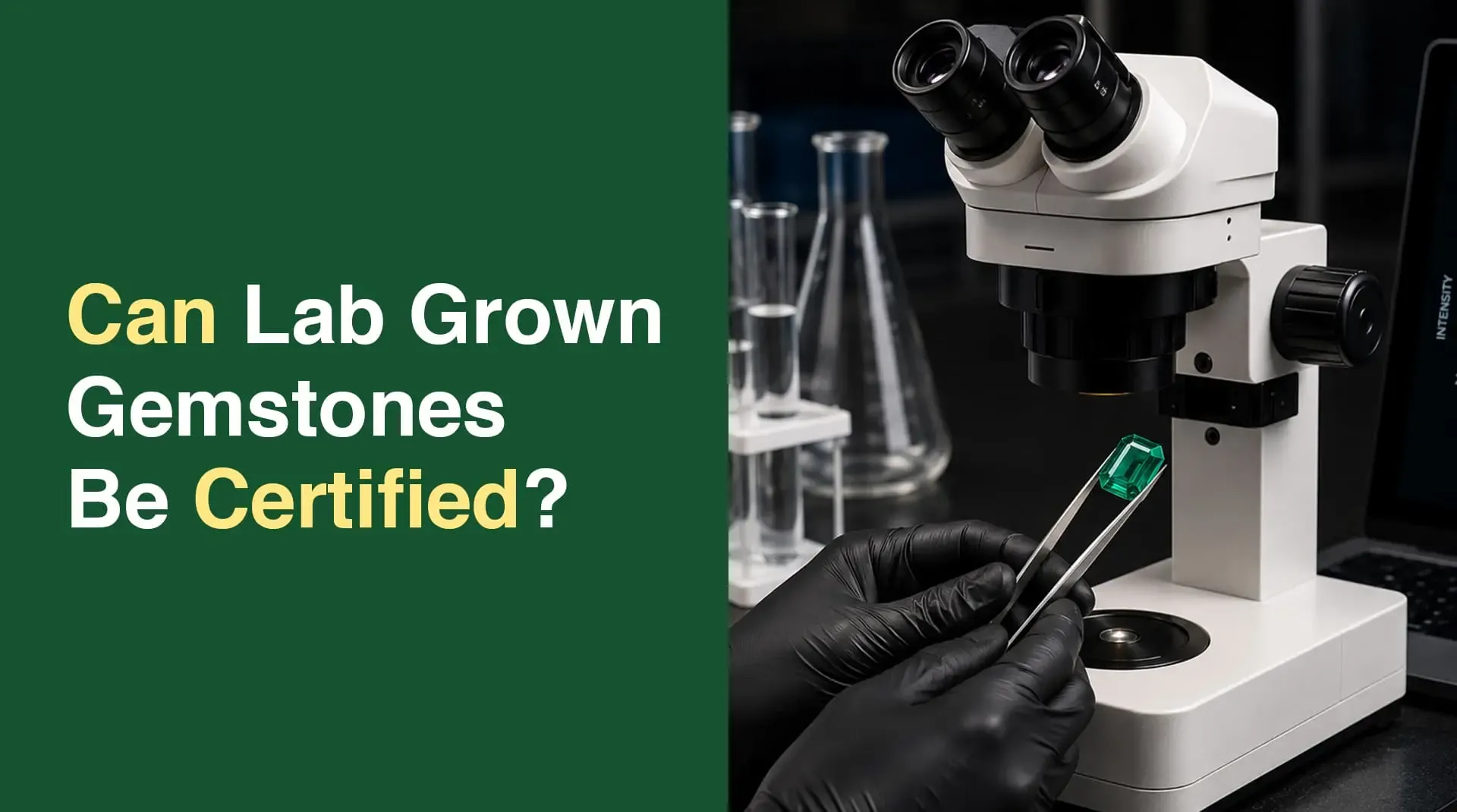
A good lab-grown colored gemstone should come with a report from an independent gemological lab. Groups like the Gemological Institute of America (GIA) and the International Gemological Institute (IGI) grade lab-grown emeralds, rubies, and sapphires. Their reports clearly state that the stone is lab-grown and include details like weight, size, color, and clarity.
A report from a trusted lab does two things: it proves the stone is what the seller claims, and it lets you compare stones from different sellers fairly. Ask which lab issued the report, if it covers the loose stone or finished jewelry, and if you can check the report number on the lab’s website. If a seller only offers their own certificate and not an independent one, ask more questions. For more details, see our guide to lab-grown gemstone certification.
4. Has the Gemstone Been Treated or Enhanced?
Lab-grown does not always mean untreated. Like other corundum gemstones, a lab-grown ruby or sapphire can be treated after it is made, often with heat to improve color. Sometimes, less honest sellers use dye or diffusion to hide a weak color. Gem labs have found cases where treatments were not disclosed, so remember that "lab-grown" and "untreated" are not the same thing.
Emeralds are almost always treated with oil or resin to fill tiny fractures and improve clarity, whether they are lab-created or synthetic. This is a normal industry practice, not a flaw, but it should still be disclosed because it affects how you care for the stone. Ask the seller what treatments the stone has had, and make sure their answer matches the grading report.
5. How Does the Color and Clarity Actually Look?
Color and clarity should be judged in person or, at a minimum, on a video shot in natural light. You should judge color and clarity in person, or at least by watching a video shot in natural light, not just a studio photo. This is especially important for colored gemstones. Lab-created sapphires often have visible color zoning, so even the best ones show different shades of blue rather than a single, flat color. The way the stone is cut matters as much as the material. Studio lighting can make a stone look better than it does in regular light at home.to any photos, and ask how the color and clarity of your lab-grown sapphire, lab-grown ruby, or lab-grown emerald were graded against what reference, and by whom

6. How Durable Is This Specific Stone?
Hardness depends on the mineral, not where it was formed. All rubies and sapphires have the same durability, whether they are natural or lab-grown. Here’s how DEDIAM’s three gemstones compare:
Ruby & Sapphire (Corundum) 9 on the Mohs hardness scale, among the hardest materials known is an excellent choice for a ring worn daily.Emerald (Beryl) typically 7.5 to 8 on the Mohs scale is still durable but more prone to chipping at facet edges due to fractures common in the stone.
Protective Settings a bezel or halo, rather than exposed prongs. A protective setting, like a bezel or halo instead of exposed prongs, can make a big difference for a lab-grown emerald that will be worn often. sapphire, or emerald, and how you actually plan to wear it. An engagement ring worn every day is a different decision from an occasional-wear pendant. We go into more depth on everyday wear in Do Lab-Grown Gemstones Last Forever?
7. What's the Price Per Carat, and What's Driving It?
Price per carat depends on several things, including how the stone was grown, cut, and graded. Since lab-grown stones are not limited by natural rarity, carat size alone should not decide your budget. A smaller stone with great color and cut can look better and cost less than a bigger stone with poor color. Here are the main factors:
- Growth Method flux or hydrothermal material generally costs more than flame-fusion material of the same size and color.
- Carat Weight larger stones cost more per carat.
- Color Saturation richer, more even color increases value.
- Clarity fewer visible inclusions increase the price.
- Cut Precision a well-cut stone reflects light better than a poorly cut one of the same size.
Ask for the synthetic sapphire. Ask for the price per carat for synthetic sapphire, emerald, or ruby, not just the total price. This helps you compare offers fairly and know what is included. If a lab-created sapphire or emerald is much cheaper than others of similar size and color, ask why before assuming it’s a bargain.
8. Who Are You Buying From, and What Happens After the Sale?
The seller’s reputation and honesty are just as important as the stone. Ask if they tell you where and how the gemstone was grown, if they offer a return policy or warranty, and if they help with setting or resizing for custom pieces. Make sure you can contact a real person with questions. Also, ask how they prove their claims about ethical and sustainable gemstones. Conflict-free sourcing and low environmental impact are key reasons to choose lab-grown stones, so these terms should have real meaning, not just be marketing.
Sellers based in well-known gemstone trading centers, like Antwerp, often have generations of experience in sourcing and grading stones and are usually more willing to provide clear answers in writing. Before you buy lab-grown sapphires, synthetic emeralds, or any lab-grown gemstones, ask yourself if this is the best place for your needs, not just the most convenient.
Final Thoughts
These eight questions are simple, but together they help you make a confident purchase instead of guessing. A well-made, well-graded, and honestly described lab-grown colored gemstone offers real beauty and lasting value at a much lower price than natural stones. At DEDIAM, every lab-grown emerald, ruby, and sapphire comes with full details about how it was grown, any treatments, and complete grading documents, all backed by Antwerp’s expertise. Book a free consultation or browse our collection to see them for yourself.