Can Lab Grown Gemstones Be Certified?
Can lab-grown gemstones be certified? Yes, they can. When you send a lab-grown gemstone to a professional gemological lab, it can be tested and certified. The certification report, also known as a gemstone identification or laboratory report, confirms what the stone is, whether it is natural or lab-grown, and if any treatments are detected. For buyers, jewelers, and online sellers, certification is a reliable way to build trust in synthetic ruby, emerald, and sapphire gemstones.
More people want lab-grown gemstones because they offer beauty, consistency, affordability, and responsible sourcing. But as these stones become more popular, buyers often wonder how they can be sure of what they are getting. A gemstone certificate helps answer this. While it does not make a stone natural, rare, or investment-worthy, it gives an independent opinion about the gemstone’s identity and origin.
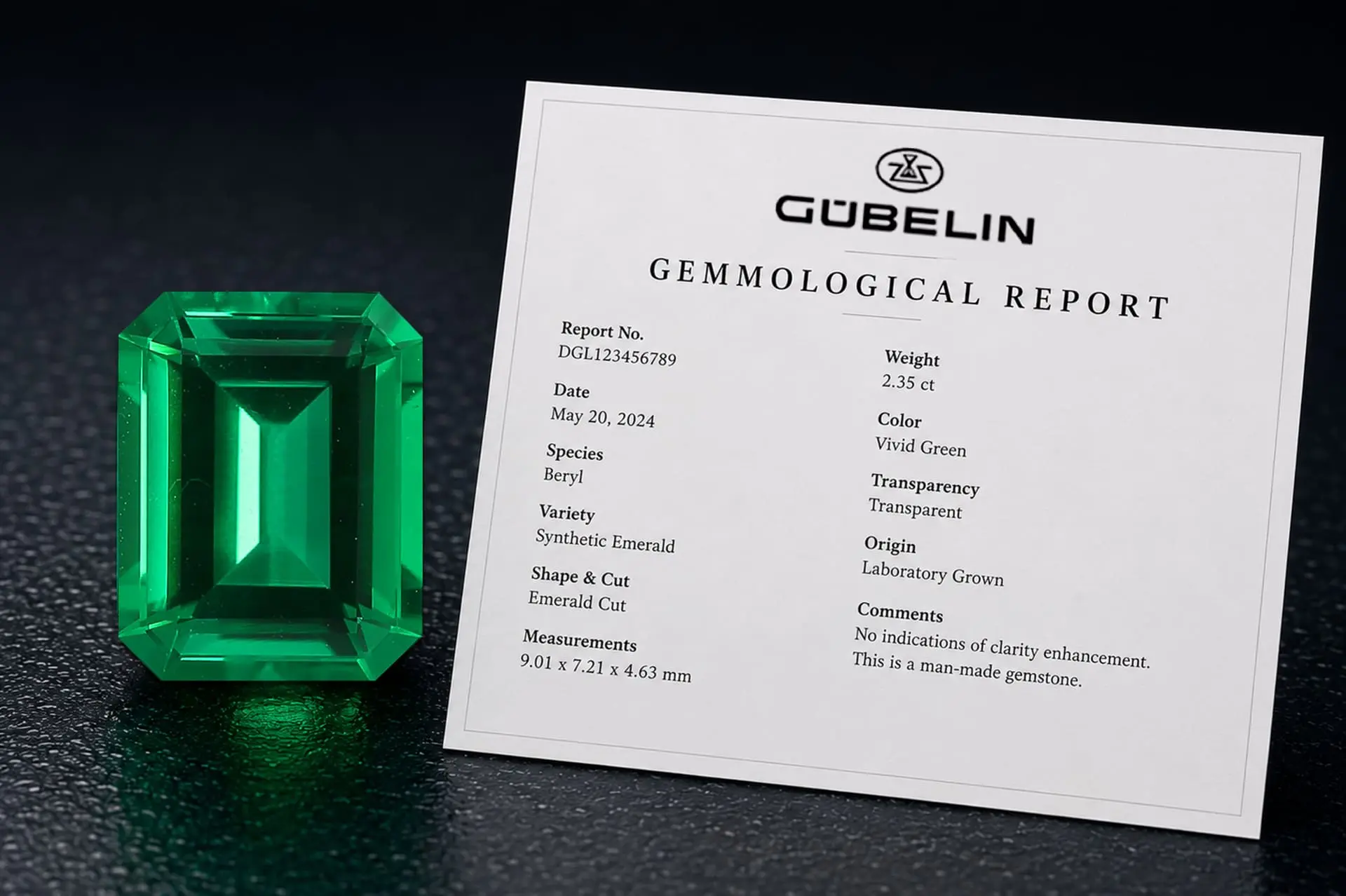
What Does Certification Mean for Lab Grown Gemstones?
In the gemstone business, people often say “certificate,” but most labs actually provide reports, not legal guarantees. These reports are based on gemological tests. For lab-grown stones, the report might identify the material as synthetic ruby, synthetic emerald, synthetic sapphire, lab-grown corundum, lab-grown beryl, or another accurate description.
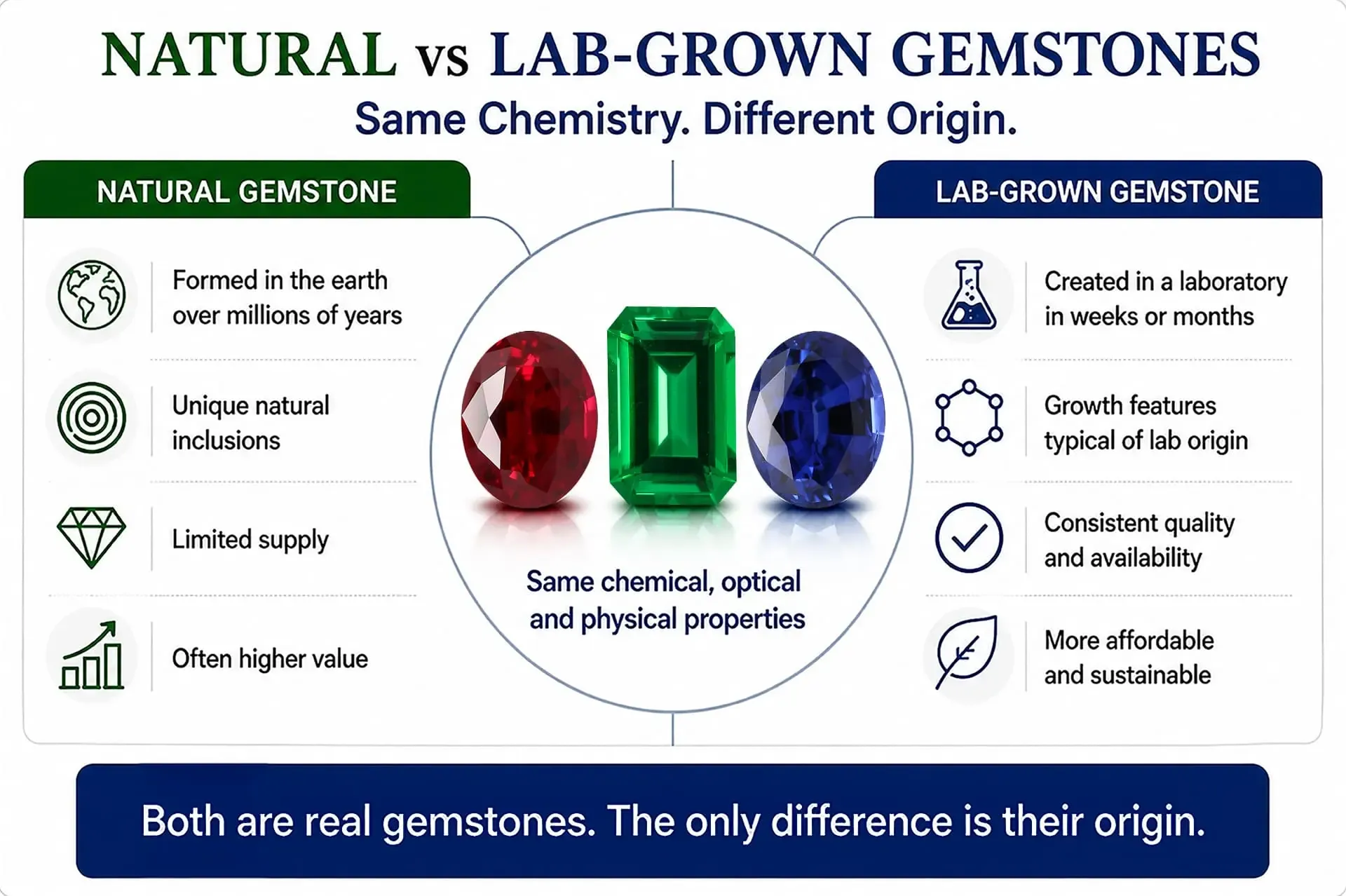
A certified lab-grown gemstone report usually lists the gemstone type, measurements, weight, shape, cutting style, color, transparency, and any comments about its origin or treatments if they can be determined. Often, the report will clearly say if the stone is natural, lab-grown, imitation, composite, or treated. This is especially helpful for colored stones, since looks alone cannot prove where a stone came from gemstones are real gemstones in the sense that many have the same chemical, optical, and physical properties as their natural counterparts. A synthetic ruby is corundum with chromium as the coloring agent, just like natural ruby. A synthetic sapphire is also corundum, and a synthetic emerald is beryl colored mainly by chromium, vanadium, or both. The major difference is origin: natural gemstones form in the earth, while lab-grown gemstones are created in controlled laboratory conditions.
How Do Gem Labs Identify Lab Grown Gemstones?
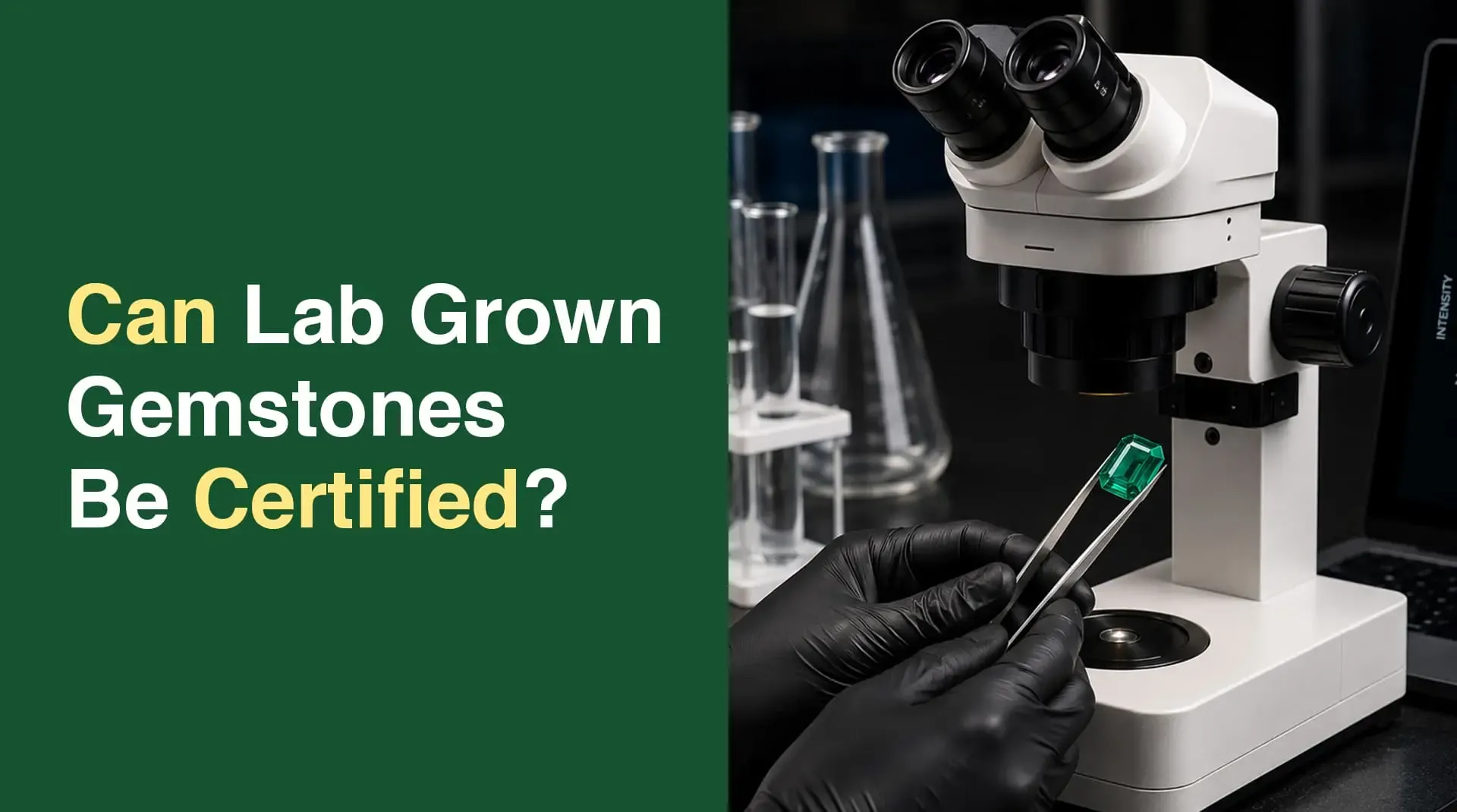
Gemological Gem labs use observation, microscopes, and advanced tools to identify lab-grown gemstones. When viewed under magnification, synthetic stones might show growth patterns, inclusions, curved lines, flux residues, gas bubbles, or other features from how they were made. Labs may also use spectroscopy and other tests to tell natural stones apart from lab-grown or imitation ones, synthetic ruby and synthetic sapphire can be produced by flame fusion, flux growth, hydrothermal growth, or other methods. Each process can leave different identifying features. Synthetic emerald is commonly made by hydrothermal or flux methods, and trained gemologists look for diagnostic inclusions, growth structures, and spectral characteristics. Certification is valuable because these details are not easy for a normal buyer to judge with the naked eye.
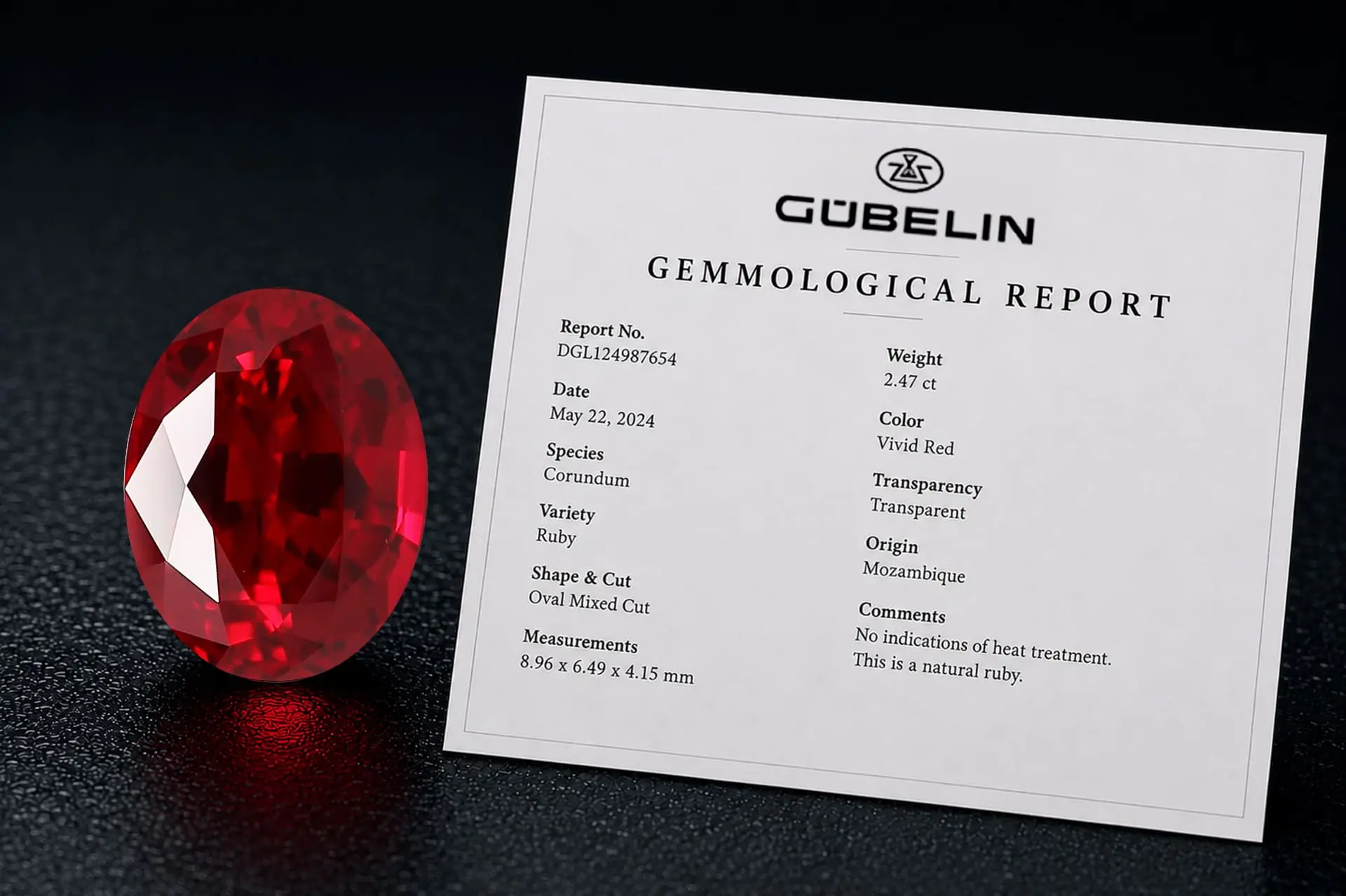
What Types of Lab Grown Gemstones Can Be Certified?
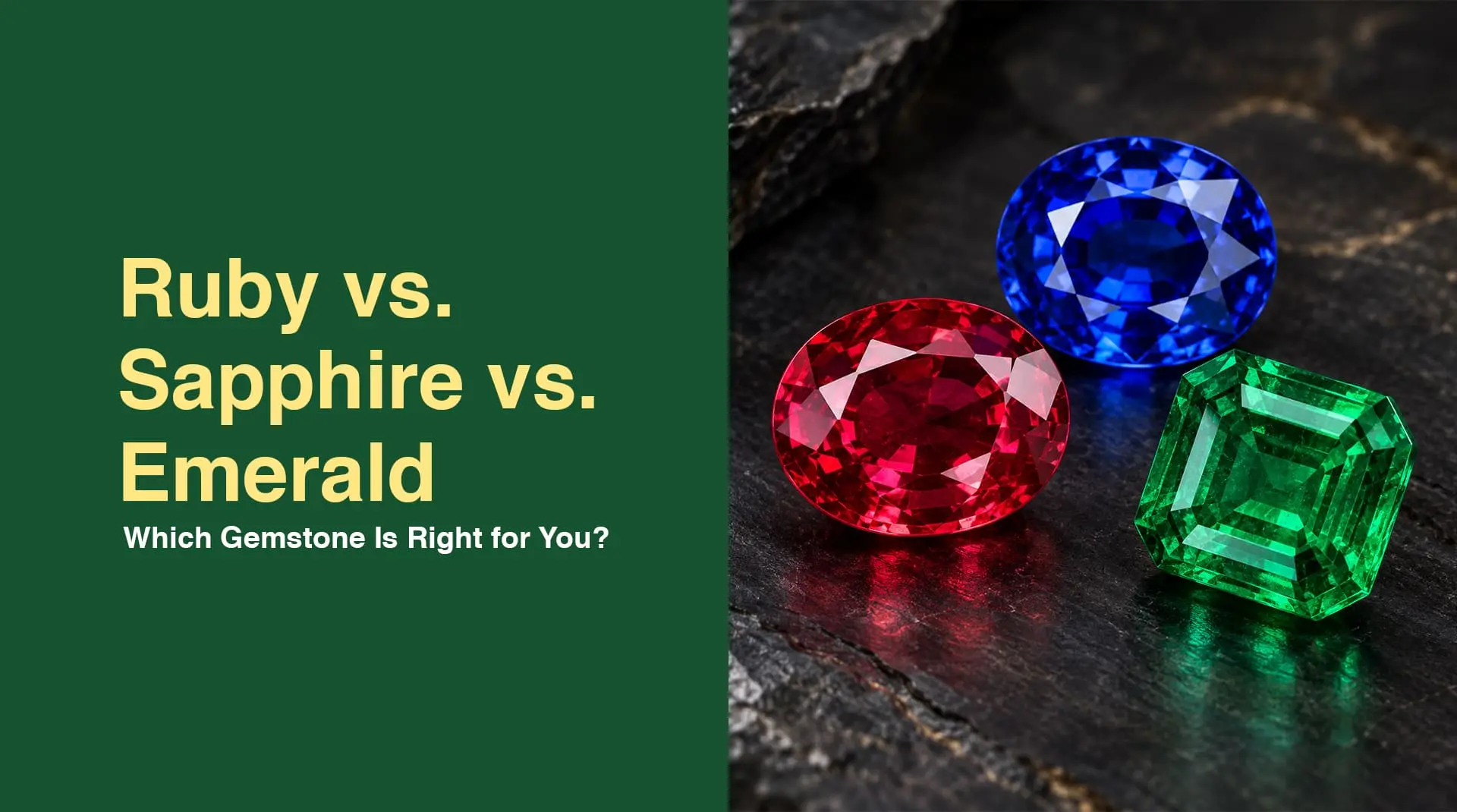
Many lab-grown colored gemstones can be sent in for identification. The most common are lab-grown ruby, sapphire, and emerald. These three are especially important in jewelry because they are some of the most well-known colored gemstones. A report for synthetic ruby, emerald, or sapphire helps customers feel sure the stone has been checked by professionals for alexandrite, opal, quartz, and other materials. The exact report format depends on the laboratory and the type of stone submitted. Some labs focus on identification and treatment detection, while others may provide more detailed color, clarity, or origin-related comments for selected gemstones.
What Information Is Included in a Gemstone Certification Report?
A gemstone report for lab-grown gemstones may include:
- Gemstone identity, such as ruby, emerald, or sapphire
- Origin type, such as natural, laboratory-grown, or synthetic
- Shape and cutting style
- Measurements and carat weight
- Color description and transparency
- Detectable treatments or enhancements
- Report number for online verification
- Comments from the gemological laboratory
For buyers, the most important parts of the report are the identity, origin, and treatment notes. A red gemstone might look like a ruby, but the report can confirm if it is a natural ruby, synthetic ruby, glass, garnet, spinel, or something else. The same goes for green stones, which could be synthetic emerald, natural emerald, treated beryl, green glass, or an imitation.

Why Certification Matters for Synthetic Ruby, Emerald and Sapphire
Certification is especially important for synthetic ruby, emerald, and sapphire because these stones are used in many types of jewelry, like rings, pendants, earrings, bracelets, and custom pieces. They look great and are durable, but their value and description depend on honest information.
For jewelers, a certificate helps avoid confusion and makes selling more transparent. For online buyers, it gives confidence before buying.
Does Certification Increase the Value of Lab Grown Gemstones?
A certificate can help build trust, but it does not make a lab-grown gemstone more expensive by itself. Natural gemstones often cost more because they are rare and in demand. Lab-grown stones are valued for their beauty, consistency, and price. Certification is about proving authenticity and being transparent, not about rarity.
Still, a certified lab-grown gemstone is often easier to sell than one without a certificate because buyers get proof of what they are buying. This is important for high-value pieces, branded jewelry, export orders, wholesale lots, and online sales. For cheaper stones, certification might not be worth the cost, but for premium synthetic ruby, emerald, and sapphire, a report can really help sales.
Certification vs Appraisal: What Is the Difference?
A gemstone certification report tells you what the stone is and describes it. An appraisal, on the other hand, estimates how much the stone is worth, often for insurance or resale. These are different things. A lab report might say a stone is a lab-grown sapphire with no treatments, while an appraisal gives a value based on market prices, setting, brand, craftsmanship, and more.
Certification is meant to provide clarity, not to make promises about value.
When you buy certified lab-grown gemstones online, ask for the report number, the lab’s name, a description of the gemstone, and good images or videos.
Conclusion
So, can lab-grown gemstones be certified? Yes, they can. Certification confirms the identity, origin, and any treatments of lab-grown colored gemstones. For synthetic ruby, emerald, and sapphire, a trustworthy gemological report makes buying clearer, safer, and more transparent.
For jewelers, exporters, and online sellers, certified lab-grown gemstones are easier to present in a professional way. Certification supports honest marketing, builds customer trust. Whether someone is buying a lab-grown ruby ring, a synthetic emerald pendant, or a synthetic sapphire for custom jewelry, certification gives confidence where it counts.
Sources / References
GIA - An Introduction to Synthetic Gem Materials