Lab-Grown, Synthetic, Created, or Simulated? What These Gemstone Terms Actually Mean
If you’re looking for lab grown gemstones, you’ll probably see words like lab-grown, synthetic, lab-created, created, simulated, and imitation. These terms might seem similar, but they don’t all mean the same thing.
This can get especially confusing if you’re searching for a lab grown emerald, ruby, or sapphire. Some descriptions use the word “synthetic,” while others say “created” or “lab-grown.” Meanwhile, “simulated” means something else entirely.
Knowing what these terms mean will help you figure out exactly what kind of gemstone you’re looking at.
This guide will explain the differences between these common gemstone terms and how they relate to lab grown colored gemstones.
What Are Lab-Grown Gemstones?
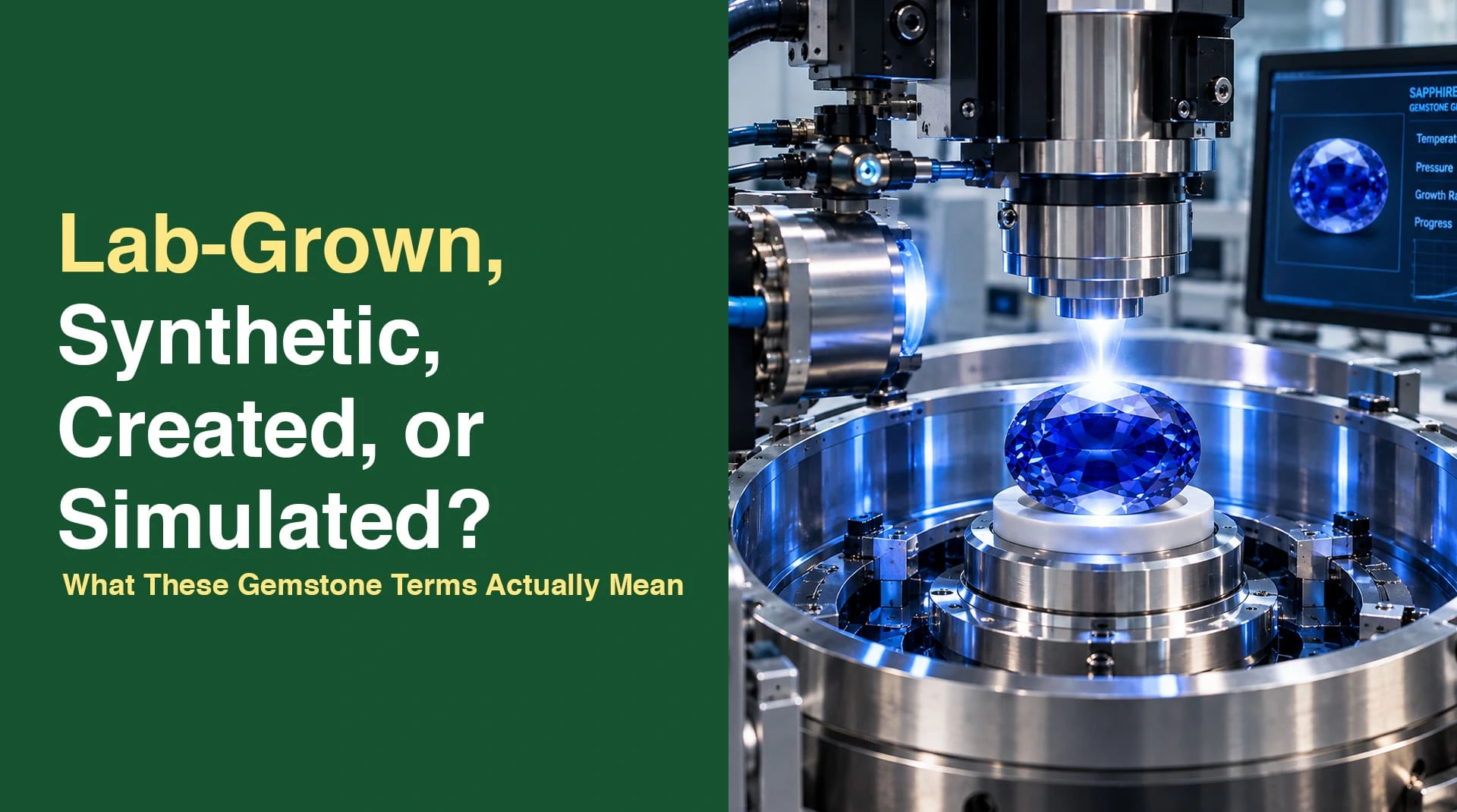
Lab grown gemstones are gemstones produced in a controlled laboratory environment rather than formed naturally through geological processes.
The term lab-grown mainly describes the gemstone’s origin. Instead of developing underground over geological periods, the gemstone is produced using specialized laboratory technology.
Lab-grown gemstones can include:
- Lab grown emerald
- Lab grown ruby
- Lab grown sapphire
- Lab grown colored gemstones
The key thing to remember is that a lab-grown gemstone isn’t just something that looks like a gemstone. It’s a real gemstone made in a lab.
For example, a lab grown ruby is produced in a laboratory rather than mined from a natural deposit. Similarly, a lab grown sapphire is produced under controlled laboratory conditions.
That’s why “lab-grown” is an important term if you want a gemstone made in a lab.
What Does Synthetic Gemstone Mean?
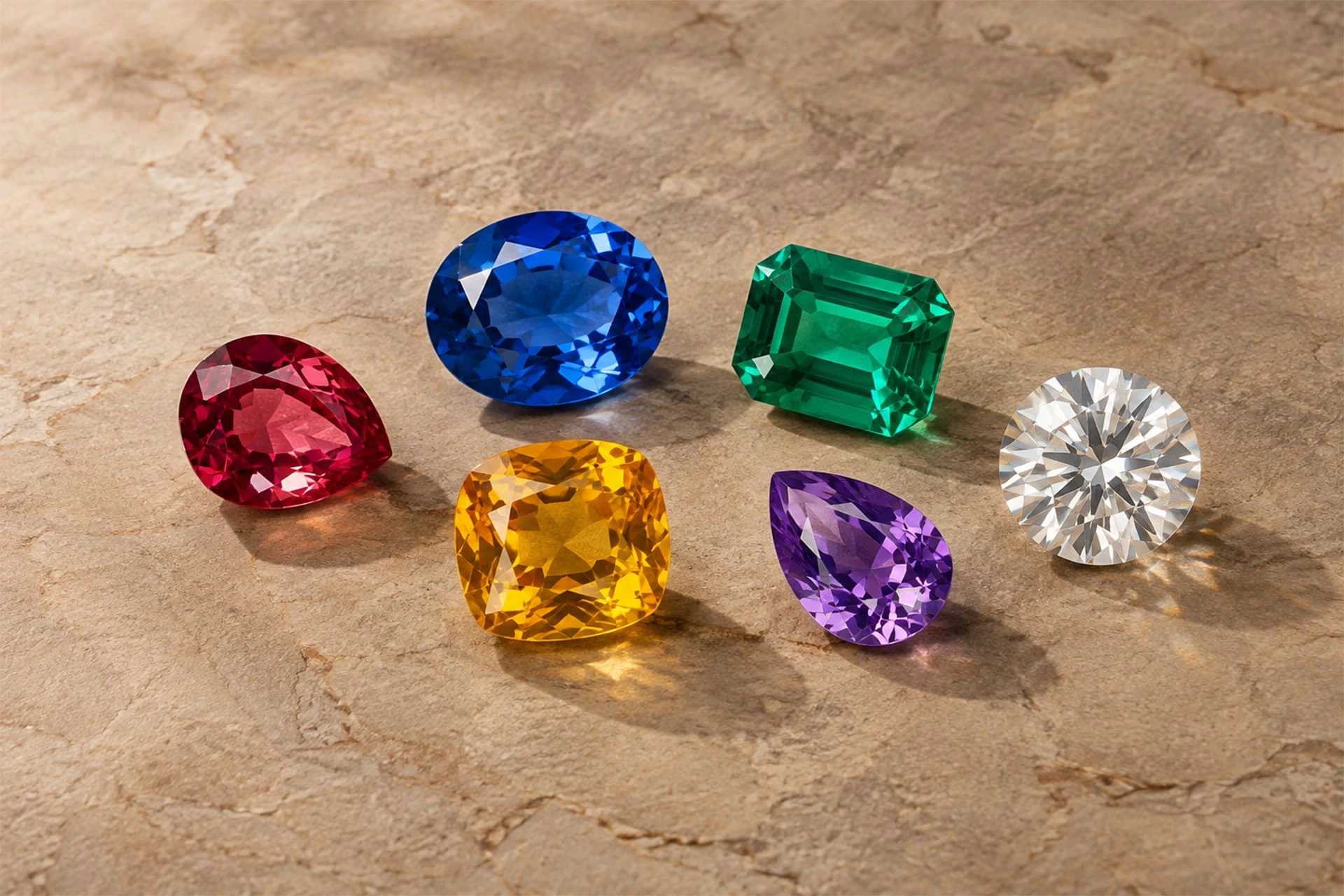
Synthetic gemstone is a technical term used by gemologists.
Put simply, a synthetic gemstone is man-made but has the same main features as a natural gemstone.
So, synthetic doesn’t just mean fake.
You may encounter terms such as:
- Synthetic gemstones
- Synthetic emerald
- Synthetic ruby
- Synthetic sapphire
- Synthetic colored gemstones
For example, a synthetic ruby is ruby material made in a lab. A synthetic sapphire is sapphire material made in a lab.
This is different from a material that just looks like ruby or sapphire.
The word “synthetic” might sound negative in everyday language, but in gemstones, it has a specific meaning.
Lab-Grown vs. Synthetic: Are They the Same?
The terms lab-grown and synthetic can overlap when describing laboratory-produced gemstones.
However, each term highlights something different.
Lab-grown focuses on the gemstone’s production:
It was produced in a laboratory.
Synthetic focuses on the gemstone’s material relationship to a natural gemstone:
It is a man-made counterpart of a particular natural gemstone.
This is why you may see descriptions such as:
- Lab grown emerald / synthetic emerald
- Lab grown ruby / synthetic ruby
- Lab grown sapphire / synthetic sapphire
Many buyers find “lab-grown” easier to understand because it clearly means the gemstone was made in a lab.
On the other hand, “synthetic” is a more technical term used in the industry.
The main thing is not to assume these two terms mean totally different things. Instead, think about what each term tells you about the gemstone.
What Does Lab-Created Gemstone Mean?
Lab-created gemstone is another commonly used term for gemstones produced in a laboratory.
You’ll often see it in jewelry descriptions for customers because it’s simple and easy to understand.
You may see:
- Lab-created gemstones
- Lab-created emerald
- Lab-created ruby
- Lab-created sapphire
- Lab-created colored gemstones
The phrase lab-created emphasizes that the gemstone was created through a laboratory process rather than naturally formed underground.
Still, it’s important to read the full description.
For example, “lab-created sapphire” tells you more than just “created gemstone.” Naming the gemstone helps you know exactly what material you’re getting.
What Does “Created Gemstone” Mean?
The word “created” is broader than “lab-grown” or “synthetic.”
You may see terms such as:
- Created emerald
- Created ruby
- Created sapphire
- Created gemstone
But “created” alone doesn’t always give you enough information about the gemstone.
When buying a gemstone, it is better to look at the complete description and determine:
- What gemstone is it?
- Was it produced in a laboratory?
- What material is it made from?
- Is it a synthetic gemstone or a simulant?
If you’re looking for lab grown gemstones, these details are more helpful than just relying on the word “created.”
What Is a Simulated Gemstone?
A simulated gemstone, or simulant, is different from a synthetic gemstone.
A simulant is a material made to look like another gemstone, especially in how it appears.
It may reproduce characteristics such as:
- Color
- Brilliance
- Transparency
- General visual appearance
But the material itself is not the same as the gemstone it looks like.
For example, a material can be used to create the appearance of a ruby without actually being ruby.
That’s called a ruby simulant, not a synthetic ruby.
The same concept applies to emerald and sapphire.
A green material might look like emerald but isn’t actually emerald. The same goes for blue materials that look like sapphire.
Synthetic vs. Simulated: The Key Difference
This is one of the most important differences to keep in mind.
Synthetic gemstone
A synthetic gemstone is a man-made counterpart of a particular natural gemstone.
For example:
Synthetic ruby → ruby material produced artificially
Simulated gemstone
A simulated gemstone is a different material used to resemble another gemstone.
For example:
Ruby simulant → another material made to look like ruby
So, to sum up:
Synthetic and simulated are not interchangeable terms.
This difference is especially helpful when you’re searching for synthetic gemstones online.
If you want a synthetic emerald, you probably don’t want an emerald simulant. The same goes for lab grown sapphire you likely want real sapphire material, not just something blue that looks like sapphire.
How These Terms Apply to Lab-Grown Emerald, Ruby and Sapphire
These terms are easier to understand when you look at the three main colored gemstones.
Lab Grown Emerald
A lab grown emerald is emerald produced through a laboratory process.
You may encounter:
- Lab grown emerald
- Synthetic emerald
- Lab-created emerald
- Created emerald
- Emerald simulant
Don’t assume these terms all mean the same thing.
A synthetic emerald refers to laboratory-produced emerald material corresponding to emerald.
An emerald simulant, on the other hand, is a different material used to resemble emerald.
So, if you want a lab grown emerald, make sure to read the full product description instead of just looking for something green.
Lab Grown Ruby
A lab grown ruby is ruby produced in a laboratory.
You may see:
- Lab grown ruby
- Synthetic ruby
- Lab-created ruby
- Created ruby
- Ruby simulant
The key difference is between ruby material made in a lab and a different material that just looks like ruby.
A synthetic ruby is real ruby made in a lab, while a ruby simulant is mainly made to look like ruby.
Lab Grown Sapphire
A lab grown sapphire is sapphire produced through a laboratory process.
Descriptions may include:
- Lab grown sapphire
- Synthetic sapphire
- Lab-created sapphire
- Created sapphire
- Sapphire simulant
Again, these terms don’t all mean the same thing.
A synthetic sapphire is real sapphire made in a lab. A sapphire simulant is a different material made to look like sapphire.
This difference is especially important when shopping online, since photos alone can’t always show what a gemstone is really made of.
What About Lab-Grown Colored Gemstones?
The terminology also applies to lab grown colored gemstones more broadly.
Colored gemstones include well-known varieties such as:
- Emerald
- Ruby
- Sapphire
- Other colored gemstone materials
When you shop for stones made in a lab, you might see phrases like lab grown colored gemstones, synthetic colored gemstones, or lab-created colored gemstones.
The exact term used depends on the gemstone and what material it’s made from.
The best way is to figure out what gemstone you’re looking at, then check if it’s:
- Natural
- Lab-grown
- Synthetic
- Simulated
- Another type of material
This helps you know exactly what you’re looking at.
Why Does Gemstone Terminology Matter?
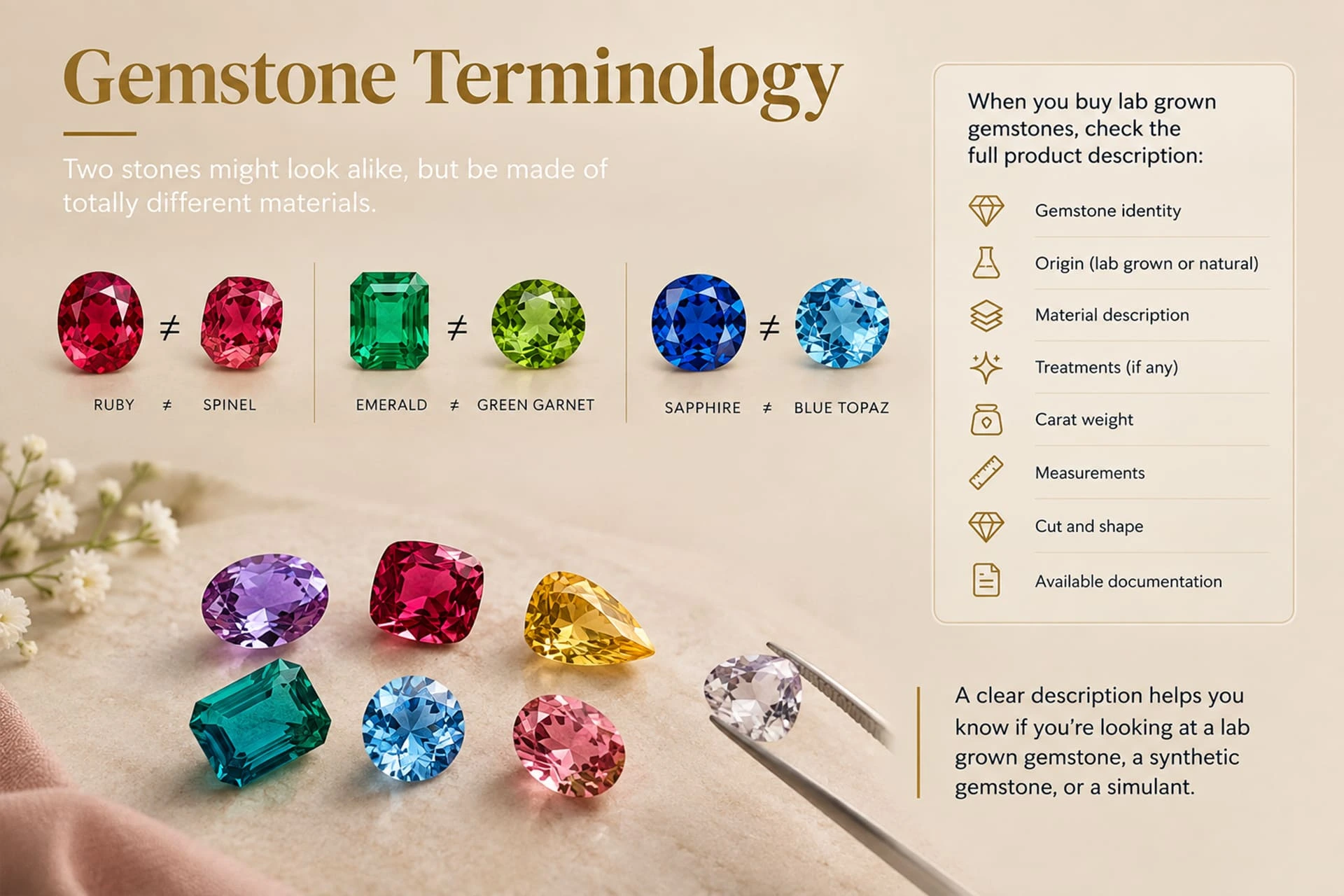
It’s important to understand gemstone terms because two stones might look alike but be made of totally different materials.
For example, a red stone is not automatically ruby, and a green stone is not automatically emerald.
Similarly, a blue stone is not automatically sapphire.
When you buy lab grown gemstones, don’t just go by color or looks.
Check the full product description, including:
- Gemstone identity
- Laboratory-grown or natural origin
- Material description
Treatments, where applicable
- Carat weight
- Measurements
- Cut and shape
- Available documentation
A clear description helps you know if you’re looking at a lab grown gemstone, a synthetic gemstone, or a simulant.
Common Misunderstandings About Gemstone Terms
"Synthetic means fake."
Not always. In gemology, “synthetic” has a specific technical meaning and doesn’t just mean fake.
"Anything made in a laboratory is an imitation."
Not always. A lab can make real gemstone material, not just something that looks like a gemstone.
"Synthetic and simulated mean the same thing."
They don’t. “Synthetic” and “simulated” describe different relationships between the material and the gemstone it looks like.
"Created always means lab-grown."
The word “created” is broad, so it’s best to read the full product description.
"A gemstone’s color tells you what it is."
Color alone isn’t enough to identify a gemstone. Different materials can look very similar.
How to Choose the Right Lab-Grown Gemstone
If you want to buy lab grown gemstones, start by deciding which gemstone you’re after.
For example:
Looking for an emerald?
Search specifically for lab grown emerald or an appropriate synthetic emerald description rather than simply searching for green gemstones.
Looking for a ruby?
Look for lab grown ruby or synthetic ruby rather than simply looking for red stones.
Looking for a sapphire?
Search for lab grown sapphire or synthetic sapphire, instead of just relying on blue color.
This simple approach will help you find exactly what you want.
Conclusion
Terms like lab-grown, synthetic, lab-created, created, and simulated can be confusing, but each one means something different.Lab-grown primarily describes a gemstone produced in a laboratory.Synthetic is a technical gemstone term used for a man-made counterpart of a natural gemstone.Lab-created is a commonly used consumer-friendly term for laboratory production.Created is broader and should be understood in context.Simulated describes a different material used to resemble another gemstone.
Knowing these differences is especially helpful when you’re shopping for lab grown gemstones like emerald, ruby, sapphire, or other colored stones.Instead of judging a gemstone by just one word or its color, read the full description to know exactly what material you’re getting.When you know the right terms, it’s much easier to shop for lab-grown and synthetic gemstones and make a smart choice.