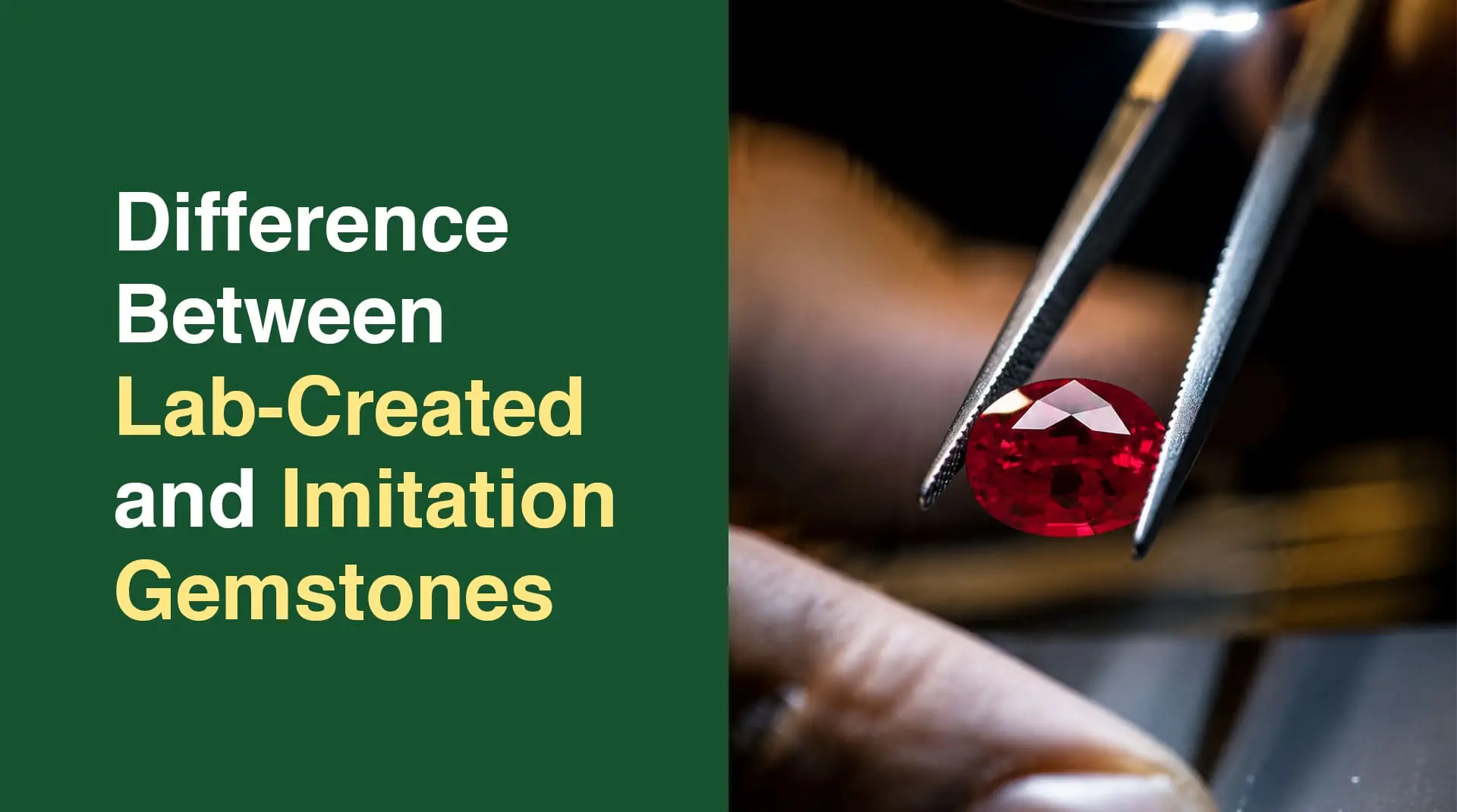
Difference Between Lab-Created and Imitation Gemstones
When people shop for colored gemstones, the first thing they usually notice is how the stone looks. A gemstone with great color, sparkle, and a nice cut stands out right away. However, two stones that look alike might actually offer very different value to the buyer.
That’s why it’s important to understand the difference between lab-created and imitation gemstones.
If you mainly want a stone that looks like a certain gemstone, an imitation could be a good option. But if you want a gemstone made in a lab that shares the same qualities as the real thing, lab-created stones are a better choice.
In this guide, we’ll explain how lab-created and imitation gemstones are different, the benefits of choosing lab-created stones, and what you should think about before buying.
What Are Lab-Created Gemstones?
Lab-created gemstones are made in laboratories instead of forming naturally underground.
Today’s technology allows manufacturers to grow colored gemstones in controlled settings. This means they can make stones that are more consistent in quality and appearance.
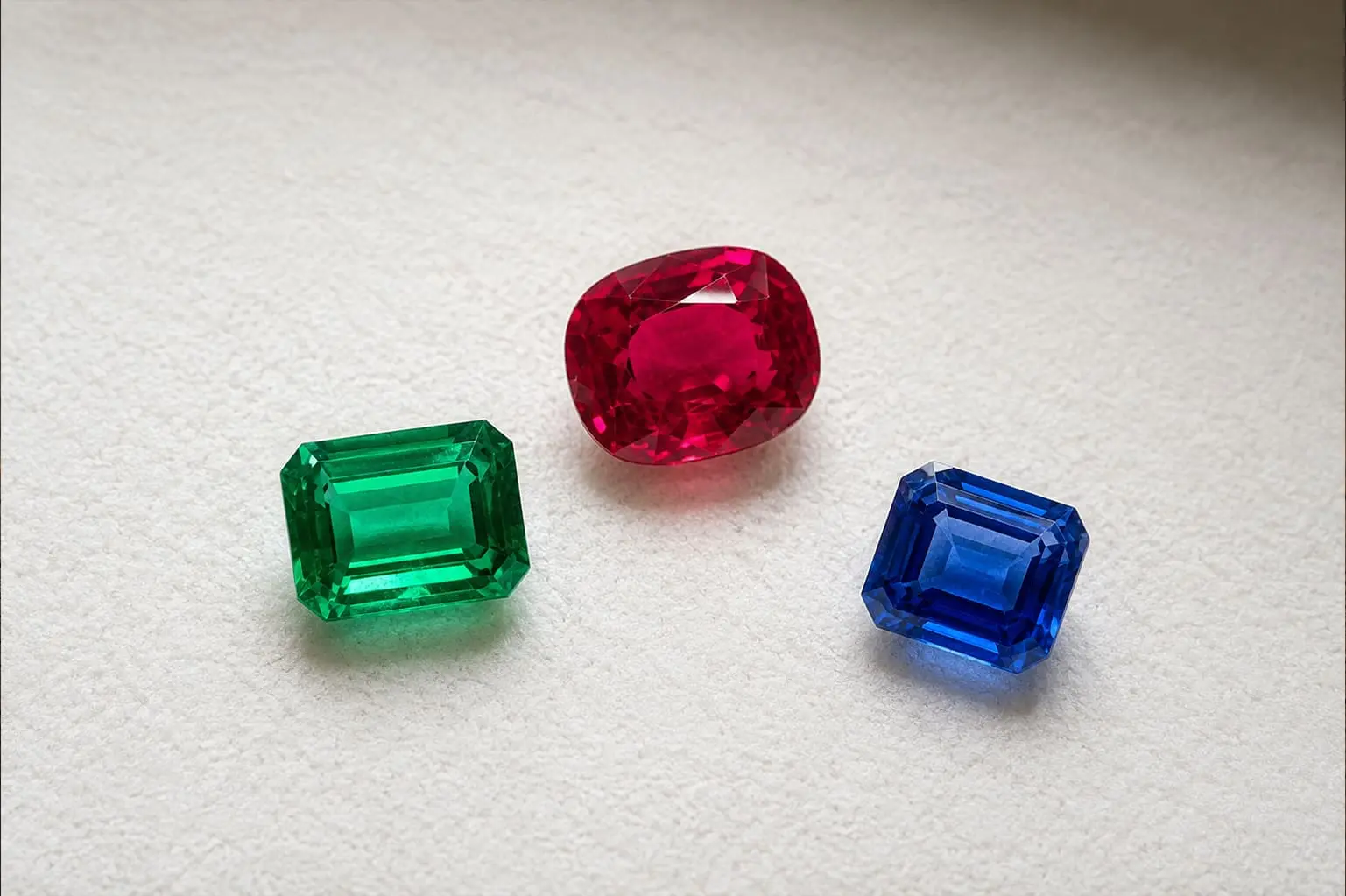
There are several types of lab-created gemstones, such as:
- Lab-created emeralds
- Lab-created rubies
- Lab-created sapphires
- Other laboratory-created coloured gemstones
One big advantage for buyers is that lab-made gemstones are usually more consistent and easier to find than natural ones.
Lab-created gemstones can also be cut into many shapes and sizes, so they work well for all kinds of jewelry.
What Are Imitation Gemstones?
Imitation gemstones are materials chosen mainly because they look like another type of gemstone.
These stones are mostly about looks. The material itself does not have to be the same as the gemstone it copies.
Imitations can be made from many different materials, depending on the product. What is most important for buyers is that the stone is clearly described for what it really is.
For example, if someone wants the look of a certain colored gemstone, they might pick an imitation because they care most about the color and style.
This can be a good choice as long as the material is honestly described.
But if someone wants the actual gemstone, not just its look, they might prefer a lab-created version instead.
Lab-Created vs Imitation: What’s the Real Difference?
The main difference is what you are really choosing as a buyer.
Lab-created gemstones are made by using technology to produce the same type of gemstone in a lab.
Imitation gemstones are mainly made to look like another gemstone, but they are not the same material.
This difference is important because the material of a gemstone affects things like:
- Hardness
- Durability
- Optical behaviour
- Light interaction
- Care requirements
- Jewellery suitability
So, picking between the two is not just about which stone looks nicer.
It’s also about what you want your gemstone to be.
Why Choose Lab-Created Gemstones?
If you care about more than just looks, lab-created gemstones have several benefits to consider.
1. You Are Choosing a Gemstone, Not Just a Look-Alike
A big reason to choose a lab-created gemstone is that you get the real gemstone material, not just something that looks like another stone.
This difference matters, especially if you are buying a gemstone for a special piece of jewelry.
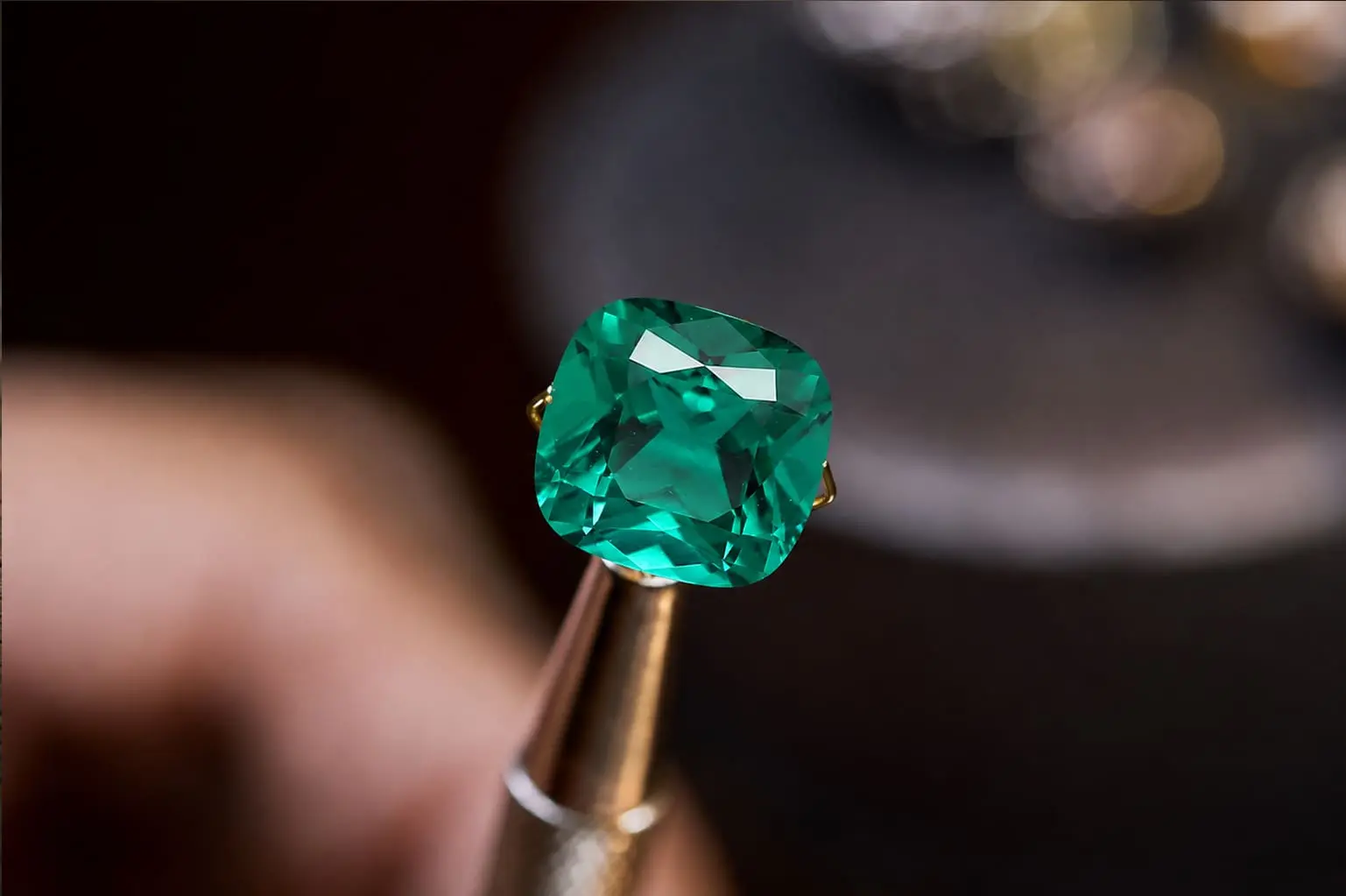
Rather than picking something just because it looks like an emerald, ruby, or sapphire, you can choose a lab-created emerald, ruby, or sapphire itself.
2. Controlled Laboratory Production
Gemstones made in a lab are produced in carefully controlled settings.
This allows manufacturers to better manage the factors that affect how gemstones grow and are made.
By controlling the process, manufacturers can make gemstones that are more consistent, which is especially helpful for jewelry collections or when matching stones.
For buyers, this means it is easier to find gemstones with the qualities they want, instead of depending only on what nature provides.
3. Greater Availability
Lab-created gemstones are often easier to find than natural ones.
The supply of natural gemstones depends on where they are found, how they are mined, and whether the right qualities are available.
Making gemstones in a lab gives people another way to get them, and it can be easier to find the colors, sizes, and cuts they want.
This is especially helpful for jewelry designers who need:
- Multiple matching stones
- Specific sizes
- Particular cuts
- Consistent colour
- Stones for a larger jewelry collection
4. More Choice for Jewelry Designs
Lab-created colored gemstones are made and shaped for many different types of jewelry.
The options available depend on the gemstone and the maker, so buyers can choose from different:
- Shapes
- Cuts
- Sizes
- Colours
- Carat weights
This means designers and buyers have more flexibility when planning a piece of jewelry. A cut gemstone can therefore be considered not only as an alternative to mined material, but also as a practical option for creative jewelry design.
5. Consistency Can Be an Advantage
Consistency is especially helpful when a piece of jewelry needs more than one gemstone.
Think about a design that uses several stones that need to match in color and appearance.
It can be hard to find natural gemstones that match each other closely.
Lab-grown gemstones offer more consistency, which makes them a good choice for:
- Matching earrings
- Multi-stone rings
- Tennis-style jewelry
- Gemstone bracelets
- Coordinated jewelry collections
- Custom designs
For designers, this reliability can make planning much easier.
Are Lab-Created Gemstones Better for Jewelry?
For many buyers, yes - particularly when the priority is obtaining the gemstone itself with consistent availability and characteristics rather than simply finding a look-alike material.
Still, whether a gemstone is suitable depends on its unique qualities and how you plan to use it in jewelry.
For example, a stone in a ring you wear often will face more bumps and scratches than a stone in a pendant.
So, when picking a lab-created gemstone, it’s important to think about:
- The specific gemstone
- Hardness and durability
- Jewellery setting
- Frequency of wear
- Care requirements
- Size and cut
Just because a gemstone is lab-created doesn’t mean they all act the same way. The qualities of each specific gemstone are still important.
Lab-Created Gemstones Can Offer Attractive Value
Many buyers look at lab-created gemstones because of their price.
Several things can affect the price of a gemstone, such as:
- Size
- Colour
- Clarity
- Cut
- Carat weight
- Availability
- Craftsmanship
- Certification
- Market demand
Lab-created gemstones often offer a good mix of quality, availability, and price.
This makes them a good choice for people who want a colored gemstone for jewelry but need to stick to a budget.
Instead of picking an imitation just because it costs less, buyers can see if a lab-created gemstone is a better fit for what they want.
Lab-Created Gemstones Offer More Than Appearance
One major difference between the two options is the reason you choose them.
People choose an imitation mainly because it resembles another gemstone.
A lab-created gemstone is chosen because the buyer wants a laboratory-made version of that gemstone.
This distinction becomes important when the gemstone itself has meaning to the buyer.
Someone buying an emerald-colored stone and someone specifically buying a lab-created emerald may have very different expectations.
The first buyer may want color above all.
The second may specifically want an emerald produced through laboratory technology.
Neither preference is wrong. Understanding the difference helps you make the right choice.
Are Imitation Gemstones Always a Bad Choice?
Not always.
It’s important to be fair when comparing real and imitation gemstones.
Imitation gemstones can be useful, especially when how they look matters more than whether they are genuine.
You might consider imitations for things like:
- Fashion jewelry
- Costume jewelry
- Decorative pieces
- Statement designs
- Accessories you only wear occasionally
- Designs where you want a certain look
What really matters is being honest about what the gemstone is.
If buyers know they are getting an imitation, they can decide if it’s right for them.
The real issue isn’t that imitation gemstones exist, but that buyers sometimes get confused about what they’re actually buying.
When Should You Choose a Lab-Created Gemstone?
A lab-created gemstone might be the right choice if you are looking for:
A specific gemstone
If you want an emerald, ruby, or sapphire instead of a lookalike, a lab-created gemstone is a good option.
Consistent stones
If your jewelry design requires multiple stones with similar characteristics, laboratory-created gemstones can offer practical advantages.
More design flexibility
If you need a particular shape, size, or color, lab-created gemstones can offer more options, depending on availability.
Jewellery with regular use
If you plan to wear the jewelry often, it is important to think about how well the gemstone will hold up and if it fits your design.
Better understanding of what you are buying
When a lab-created gemstone is clearly described, you get helpful details about where it comes from and what it is.
What Should You Look for When Buying Lab-Created Gemstones?
If you’re thinking about buying a lab-created gemstone, try not to focus just on the term “lab-created.”
Check all the product details before making a decision.
Find out what type of gemstone it is
Make sure the listing clearly says if you’re buying a:
- Lab-created emerald
- Lab-created ruby
- Lab-created sapphire
- Another specific lab-created gemstone
Look at the cut and shape
The cut has a big impact on how the gemstone looks.
Think about whether the shape and cut will fit your jewelry design.
Look at the color
Color matters a lot for colored gemstones.
When possible, look at how the color appears under different lighting conditions.
Check the size and carat weight
Two gemstones with the same carat weight might be different sizes, depending on their shape and cut.
Check treatment information
Ask whether the gemstone has undergone any treatments and whether this information is disclosed.
Look for documentation if needed
If you’re making a higher-value purchase, gemstone documentation or a lab report can give you more details about the stone.
Can You Tell the Difference Just by Looking?
Not always.
A gemstone’s look can give you some helpful hints, but you can’t always tell exactly what it is just by how it appears.
Gem experts look at several features, not just color or sparkle, when they examine a stone.
This matters most when you’re buying a gemstone and need to know exactly what it is.
Rather than trusting online photos, quick home tests, or guessing by price, it’s better to check the seller’s description and any paperwork that comes with the stone.
Lab-Created Gemstones for Emerald, Ruby and Sapphire Jewelry
Lab-created colored gemstones are popular choices for jewelry, especially emerald, ruby, and sapphire.
Lab-Created Emerald
Lab-created emeralds are a good option for jewelry designs that need that classic emerald green look.
They come in many cuts and sizes, so designers have lots of options for rings, earrings, pendants, and more.
Lab-Created Ruby
Lab-created rubies are a choice for anyone who wants the deep red color of ruby in a stone made in a lab.
Because they’re easy to find, lab-created rubies work well in many jewelry styles and designs.
Lab-Created Sapphire
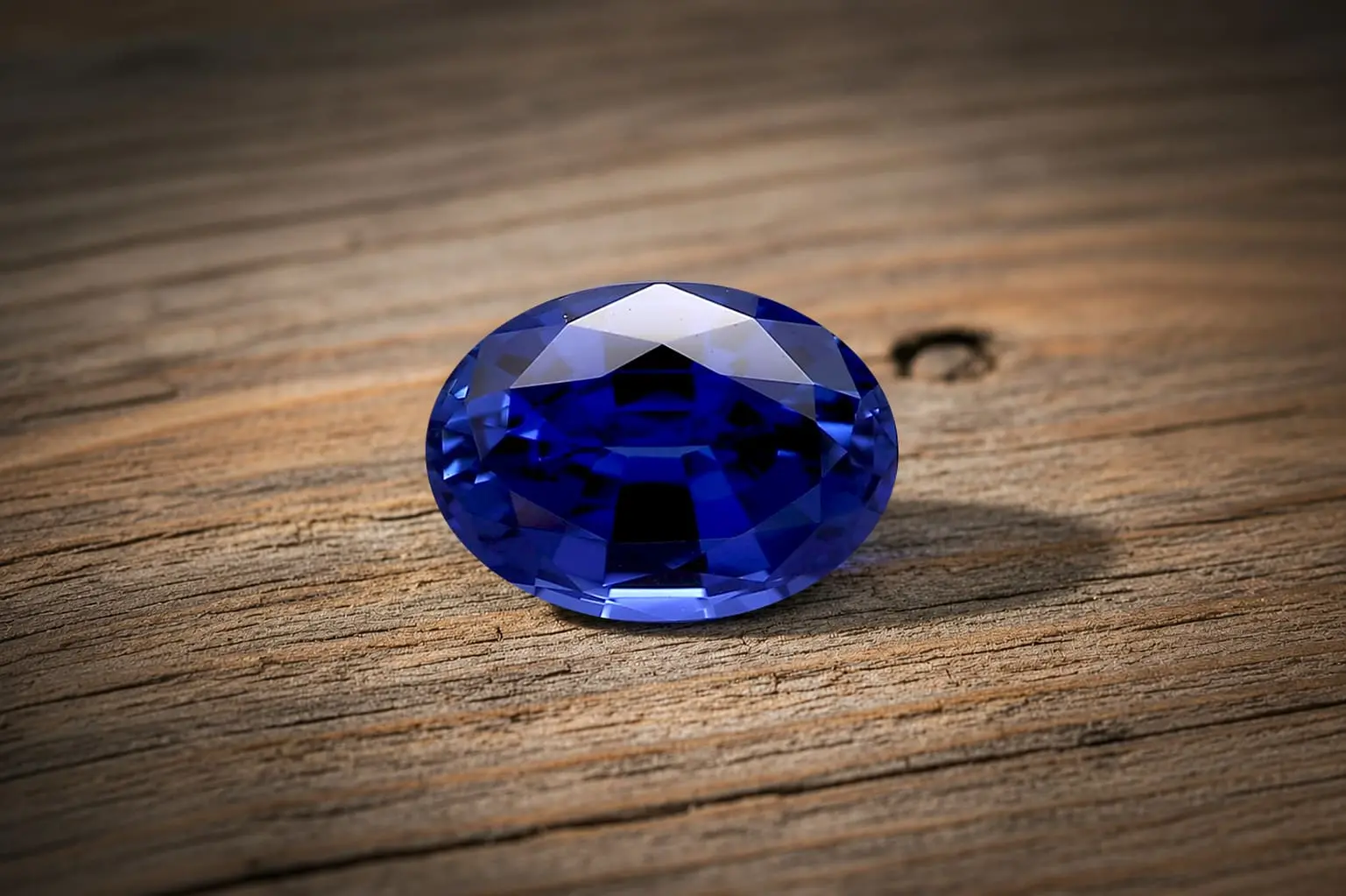
Lab-created sapphires are also a flexible choice for jewelry.
Most people think of sapphires as blue, but they actually come in many colors, which gives designers even more options.
It’s always important to think about the specific qualities of each gemstone and how you plan to use it in jewelry.
Lab-Created or Imitation: Which Should You Choose?
The best choice really depends on what matters most to you.
Choose a lab-created gemstone if you:
- Want the gemstone itself rather than simply its appearance
- Prefer controlled laboratory production
- Want more availability and design options
- Need matching stones
- Want a gemstone for a meaningful jewelry piece
- Want an attractive balance between gemstone characteristics and price
Consider an imitation if you:
- Mainly want a particular appearance
- Are buying fashion or costume jewelry
- Do not require the material to be the named gemstone
- Want a decorative alternative
If you’re looking for a lab-created emerald, ruby, sapphire, or another colored gemstone, an imitation probably won’t give you the same qualities or experience.
A Few Final Thoughts
There’s more to the difference between lab-created and imitation gemstones than just how they look.
An imitation is primarily about reproducing appearance.
Lab-created gemstones let you choose a real gemstone made in a lab, with its own unique qualities. You also get the benefits of controlled production, good availability, consistency, and lots of jewelry options.
If you mainly care about a certain color or look, an imitation gemstone might be all you need.
But if you value the gemstone’s material, qualities, versatility, and how it fits into your jewelry design, a lab-created stone could be the better choice.
When you’re picking your next gemstone, don’t just ask yourself:
“Does it look like the gemstone I want?”
It’s also worth asking:
“What am I actually buying?”
Asking that simple question can help you make a better choice and find a gemstone that fits both your expectations and your jewelry needs.