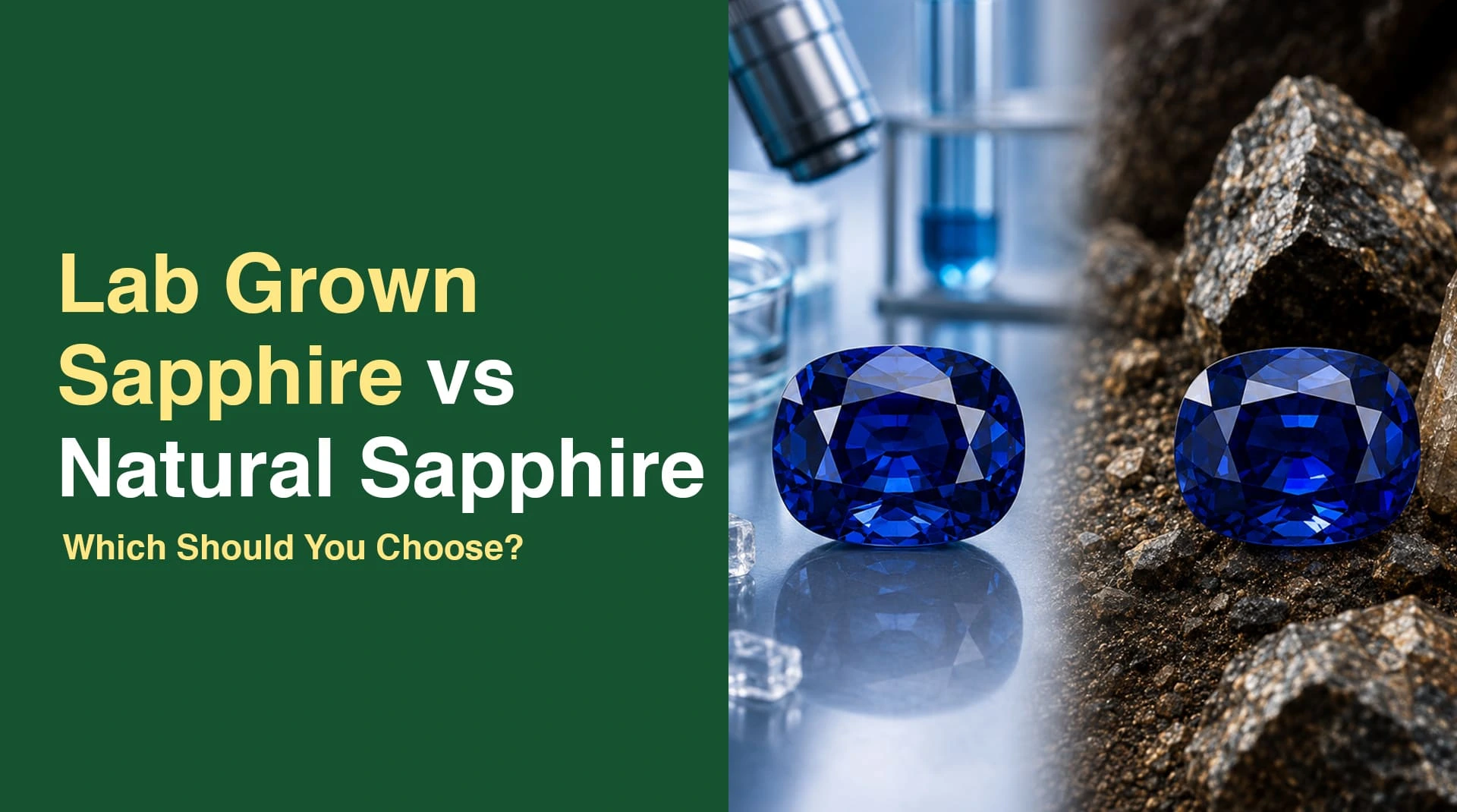
Lab Grown Sapphire vs. Natural Sapphire: Which Should You Choose?
Sapphire is a popular gemstone, valued for its rich color, sparkle, and strength. Today, you can choose between a natural sapphire, which is mined from the earth, or a lab grown sapphire, made in a laboratory setting.
Both options are real sapphires with the same mineral makeup. However, they are made differently, vary in price, and can differ in size, color, and quality.
This guide will explain the key differences between lab grown and natural sapphires, helping you decide which one suits you best.
What Is a Sapphire Gemstone?
A sapphire is a type of corundum, which is a crystal made from aluminum oxide. Sapphires are well known for being very hard, coming just after diamonds on the Mohs scale. This makes them one of the toughest gemstones for jewelry.
Most people know sapphires as blue stones, but they actually come in many different colors:
- Blue sapphire (the most iconic and widely known)
- Red sapphire (technically corundum, though red corundum is classified as ruby)
- Pink, yellow, and green sapphire
- Padparadscha sapphire (a rare pink-orange blend)
- White or colorless sapphire
The color of a sapphire depends on tiny amounts of other elements inside the crystal. Iron and titanium usually make sapphires blue, while other elements create the many other colors you can find.
Sapphire Chemistry and Physical Properties
Knowing what sapphire is made of helps explain why it works so well in everyday jewelry. Sapphire is made of aluminum oxide (Al₂O₃) with its atoms packed tightly in a hexagonal crystal structure, which makes it very strong.
Here are some important physical properties of sapphire:
- Hardness: 9 on the Mohs scale, second only to diamond
- Crystal system: Trigonal/hexagonal, forming a dense, durable structure
- Refractive index: High, which means sapphire reflects light well and looks very bright
- Specific gravity: About 3.95 to 4.03, so sapphire feels heavier than many other gemstones of the same size.
Natural and lab grown sapphires have the same physical and chemical makeup. That’s why a good lab created sapphire is just as durable for daily wear as a natural one. Sapphires are also used outside of jewelry, such as in scratch-resistant watch faces, camera lens covers, and some optical parts, because they are so hard and stable.
What Are Lab Grown Gemstones?
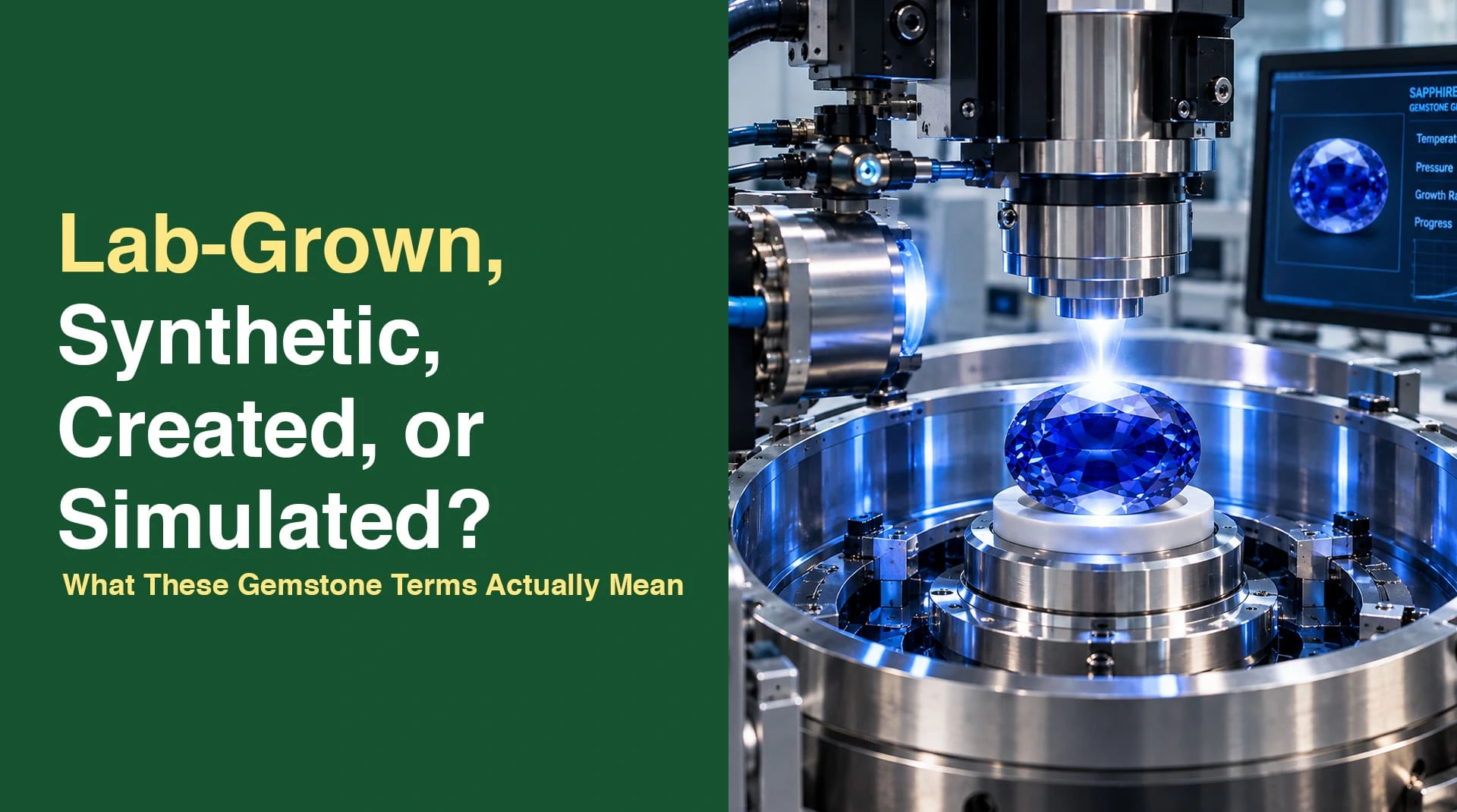
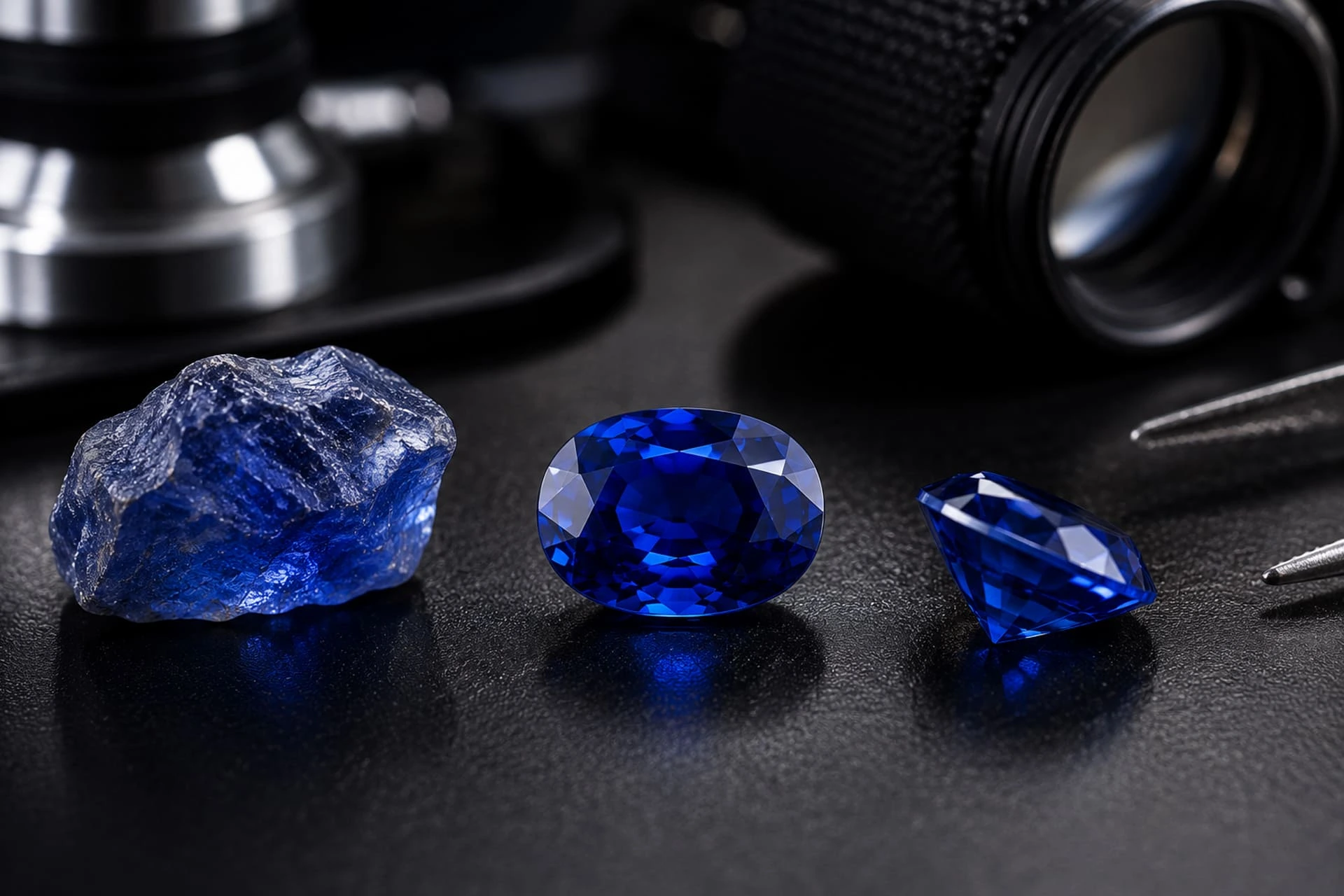
Lab grown gemstones, sometimes called synthetic or lab created gems, are made in a laboratory instead of forming underground. This is true for many colored gemstones, not just sapphire, so you might see terms like lab grown colored gemstones or synthetic colored gemstones used in the industry.
A lab grown sapphire has the same chemical and physical properties as a natural sapphire. It is real corundum, not an imitation. In gemology, the word "synthetic" does not mean fake. It just means the stone was made in a lab.
Here are some important things to know about lab grown sapphire:
- It has the same hardness, brilliance, and chemical structure as natural sapphire.
- It is not the same as a simulant like glass or synthetic spinel.
- It usually forms in a few weeks instead of taking millions of years.
- It costs much less to produce than mining and finding natural stones.
What Is a Natural Sapphire?
Natural sapphires form deep underground over millions of years. Heat, pressure, and the right mix of minerals work together in special conditions to create each crystal.
Since every deposit is different, natural corundum sapphires can vary widely in color, clarity, and size. Some have rich, even color and great clarity, while others show visible inclusions or uneven color zones.
Common properties of sapphires found in nature include:
- Natural inclusions such as rutile silk, mineral crystals, or fine fractures
- Color zoning caused by uneven trace element distribution
- Variation in saturation, even within the same mining region
- Rarity in larger sizes with strong color and clarity
This natural variety is why it is hard to find gem-quality sapphires with a deep, rich blue color. When they are found, they are often expensive.
How Are Lab Grown Sapphires Made?
Lab grown corundum can be made using several different methods, and each one changes the final stone in its own way.
Flame fusion (Verneuil method): This is the oldest and most common technique used to grow sapphire. Powdered aluminum oxide is melted at extremely high temperatures using an oxyhydrogen flame, then deposited layer by layer to form a crystal. Verneuil flame fusion is fast and cost-effective, which is why flame fusion sapphire is widely available at accessible prices.
Flux growth: Flux sapphire is grown at lower temperatures using a molten flux to dissolve and recrystallize the material slowly. Flux grown sapphire tends to more closely resemble natural growth patterns, which can make it harder to distinguish from natural stones without lab testing.
Hydrothermal growth uses high-pressure water solutions to slowly grow the crystal, which closely copies how sapphires form in nature.
No matter which method is used, most lab grown sapphires have certain internal features like curved lines, gas bubbles, or color bands. A trained gemologist can spot these details under magnification.
Can You Tell Lab Grown Sapphire From Natural Sapphire?
Most of the time, you can't tell the difference just by looking. A well-made lab grown sapphire can be just as vivid and bright as a high-quality natural one. Natural sapphires also come in many different looks, so appearance alone usually doesn't reveal where a stone came from.
Gemologists use certain tools and tests to figure this out, such as:
- Magnification: Curved growth lines and gas bubbles point to flame fusion; natural, angular inclusions point to a geological origin
- Fluorescence testing: Certain lab grown sapphires react differently under UV light compared to natural stones
- Spectroscopy: Advanced testing can detect trace element patterns unique to natural formation
- Refractive index and specific gravity checks: Useful for ruling out simulants, though both natural and lab grown corundum share nearly identical readings
Since you can't rely on looks alone, it's best to get a certificate from a trusted gem lab for any sapphire that costs more than a modest amount. This paperwork should confirm where the stone came from and list any treatments it has had.
Lab Grown Sapphire vs. Natural Sapphire: Key Differences
Here’s a quick look at the main differences between lab created and natural sapphires:
- Origin: Lab grown sapphires are made in a controlled lab setting, while natural sapphires form underground over millions of years.
- Composition: Both types are corundum and share the same chemical and physical properties.
- Color consistency: Lab grown sapphires have more even and predictable color, while the color of natural sapphires can vary from stone to stone.
- Size availability: It’s easier to find larger lab grown sapphires, but large natural sapphires are rare and much more expensive.
- Price: Lab grown sapphires cost much less than natural sapphires of similar size and color.
- Inclusions: Natural sapphires often have geological inclusions, while lab grown sapphires usually show features related to their growth process.
- Matching stones: Lab grown sapphires are much easier to match when making jewelry with multiple stones.
Sapphire Treatments: What Buyers Should Know
Many people overlook treatment when buying sapphires, but it can have a big impact on how the stone looks and how much it is worth.
Most natural sapphires sold today are heat-treated to improve their color and clarity. This is common in the industry and usually does not make the stone less desirable. However, untreated natural sapphires with good quality are much rarer and are more expensive.
Lab grown sapphires can also be treated, depending on how they are made and finished. Here are a few things to keep in mind:
- Natural does not automatically mean untreated
- Lab grown does not automatically mean untreated either.
- Treatment disclosure should always be provided by a reputable seller, especially for higher-value pieces.
- Common treatments include heat treatment, diffusion treatment, and fracture filling.
No matter if you are buying a natural or lab created sapphire, make sure to ask about any treatments before you decide to buy.
Is Lab Grown Sapphire Real? Is It Worth Buying?
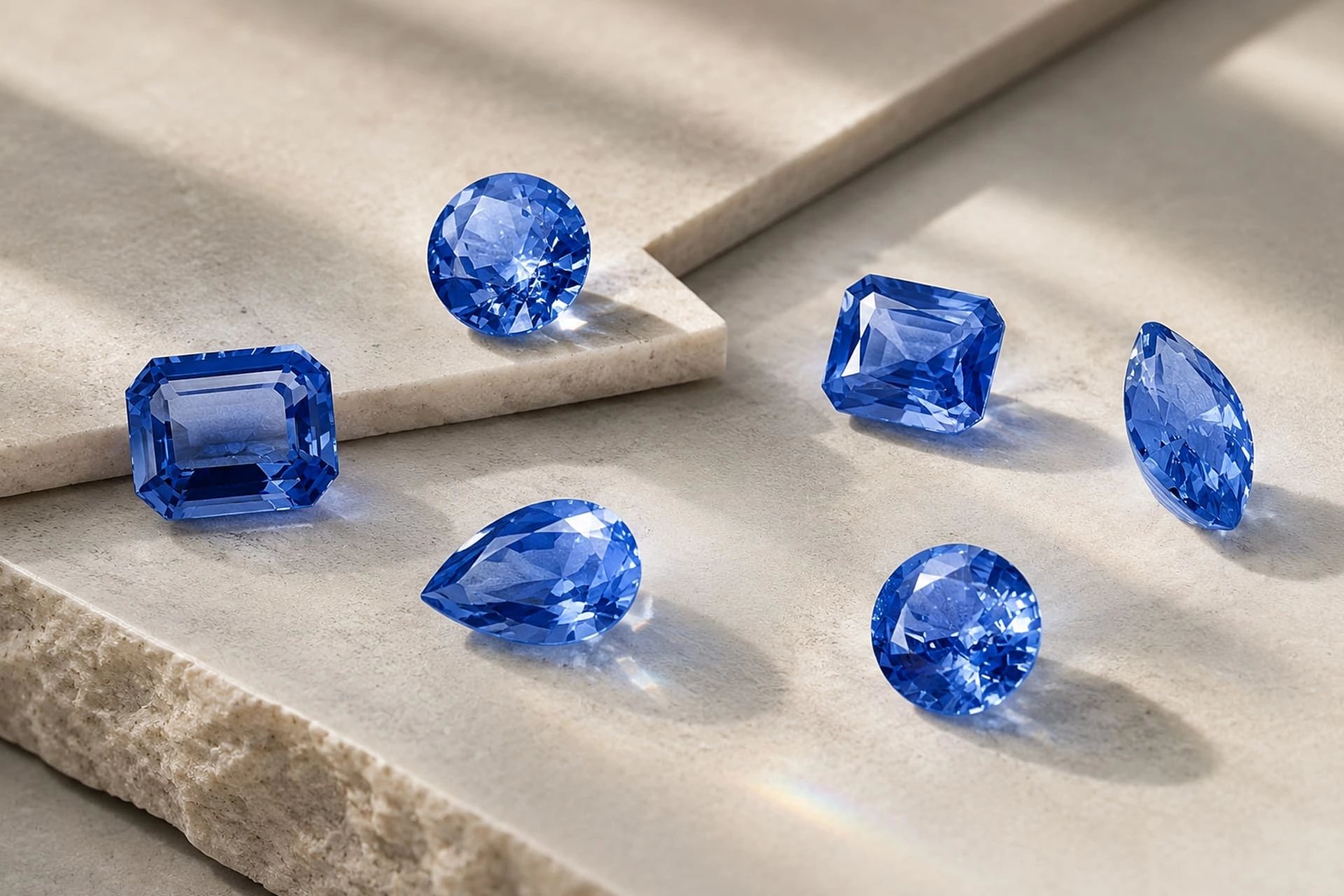
Yes, a lab grown sapphire is a real sapphire. It is not fake, and it is not a simulant. It has the same mineral makeup, hardness, and optical qualities as a natural stone.
The only difference between natural and lab grown gemstones is where they come from, not whether they are real. One forms in the earth, while the other is made in a lab. Both are genuine corundum.
Lab grown sapphire is a good choice if you want any of the following:
- A larger stone within a realistic budget
- Consistent, predictable color
- Easier sourcing for matching stones
- A more accessible price point without sacrificing brilliance
Natural sapphire might be worth the higher price if you care most about its rarity and natural origin.
Lab Grown Colored Gemstones Beyond Sapphire
Sapphire is not the only gemstone that benefits from lab grown technology. Many other colored gemstones, like lab grown ruby and lab grown emerald, are made using the same methods.
In each case, the lab created version shares the same mineral identity as its natural counterpart:
- Lab grown ruby is corundum, just like lab grown sapphire, with color driven mainly by chromium.
- Lab grown emerald is made of beryl and is created using either flux or hydrothermal methods.
- All lab created gemstones share the same main idea: they have real mineral composition, form more quickly, and are more affordable.
If you are comparing different colored gemstones, the same logic that applies to sapphire also works for most lab grown gems. They have the same chemistry, cost less, and offer more consistent color and size.
Which Should You Choose?
There is no single right answer. It depends on what you value most in a gemstone.
Pick lab grown sapphire if you care most about price, consistency, larger sizes, and easy stone matching. Choose natural sapphire if you want a rare, unique stone with a special geological origin, even if it costs more.
Both options are real sapphire gemstones. The choice is about whether you want natural rarity or practical value. Today, more people are choosing lab grown sapphire for this reason.