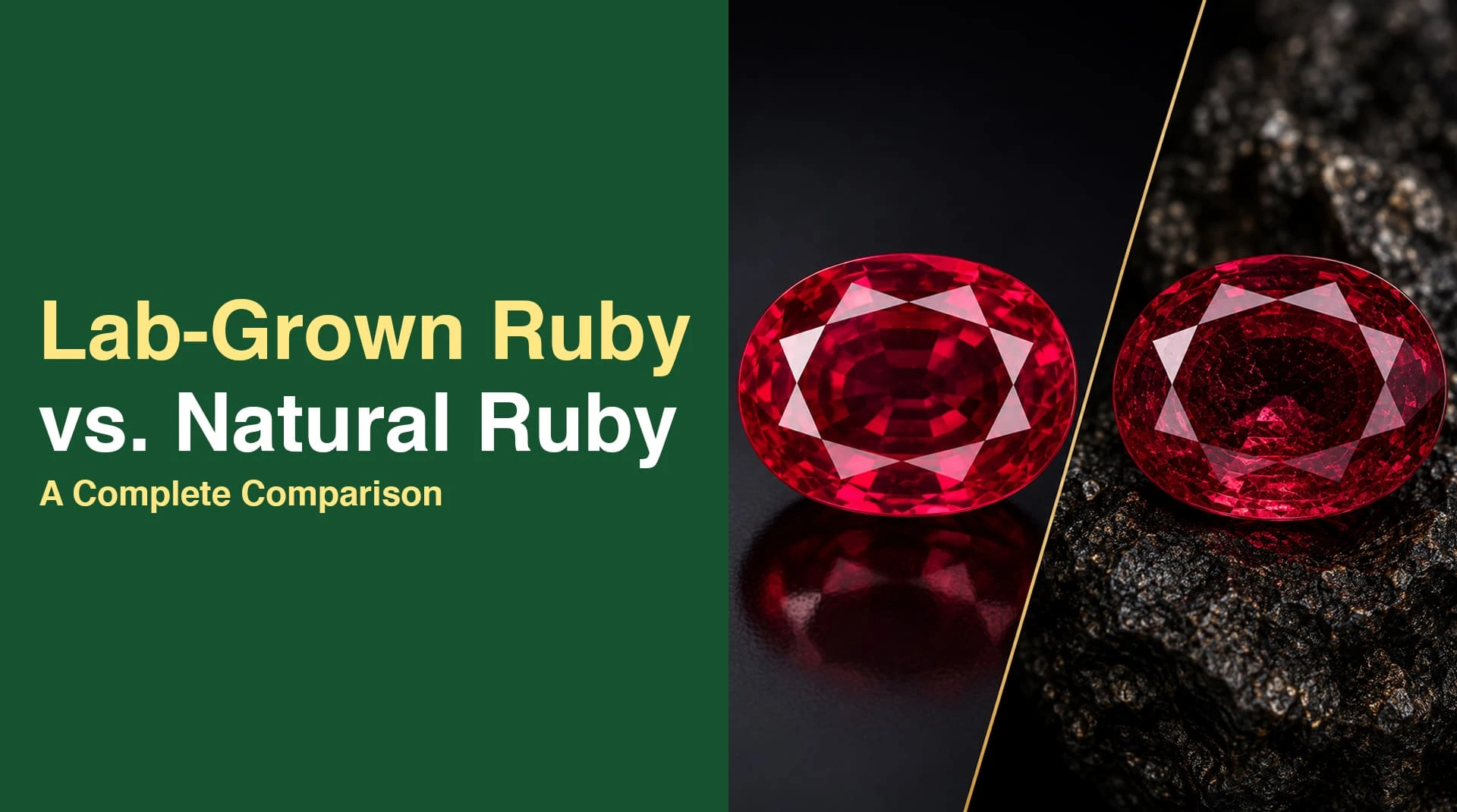
Lab Grown Ruby vs. Natural Ruby: A Complete Comparison
Rubies have been treasured for centuries for their rich red color and their special place in fine jewelry. Now, buyers have more choices, as lab grown rubies provide an affordable and accessible alternative to natural stones. While both are made of the same mineral, their different origins affect their appearance and price.
Lab grown rubies are made in labs with modern methods that mimic the natural process of forming corundum. Natural rubies form deep underground over millions of years, shaped by heat, pressure, and the earth’s chemistry. Both are corundum, but they differ in how they’re made, how easy they are to find, their internal structure, and their price.
If you want a beautiful ruby for jewelry, a lab grown stone is often a practical choice. It gives you reliable quality, many size and shape options, and prices that make bigger or more detailed designs possible. Natural rubies are still loved for their rare and unique origins, but that rarity usually means a much higher price. This guide covers the main differences between lab grown and natural rubies and explains why many jewelry buyers today choose lab grown stones.
What Is a Lab Grown Ruby?
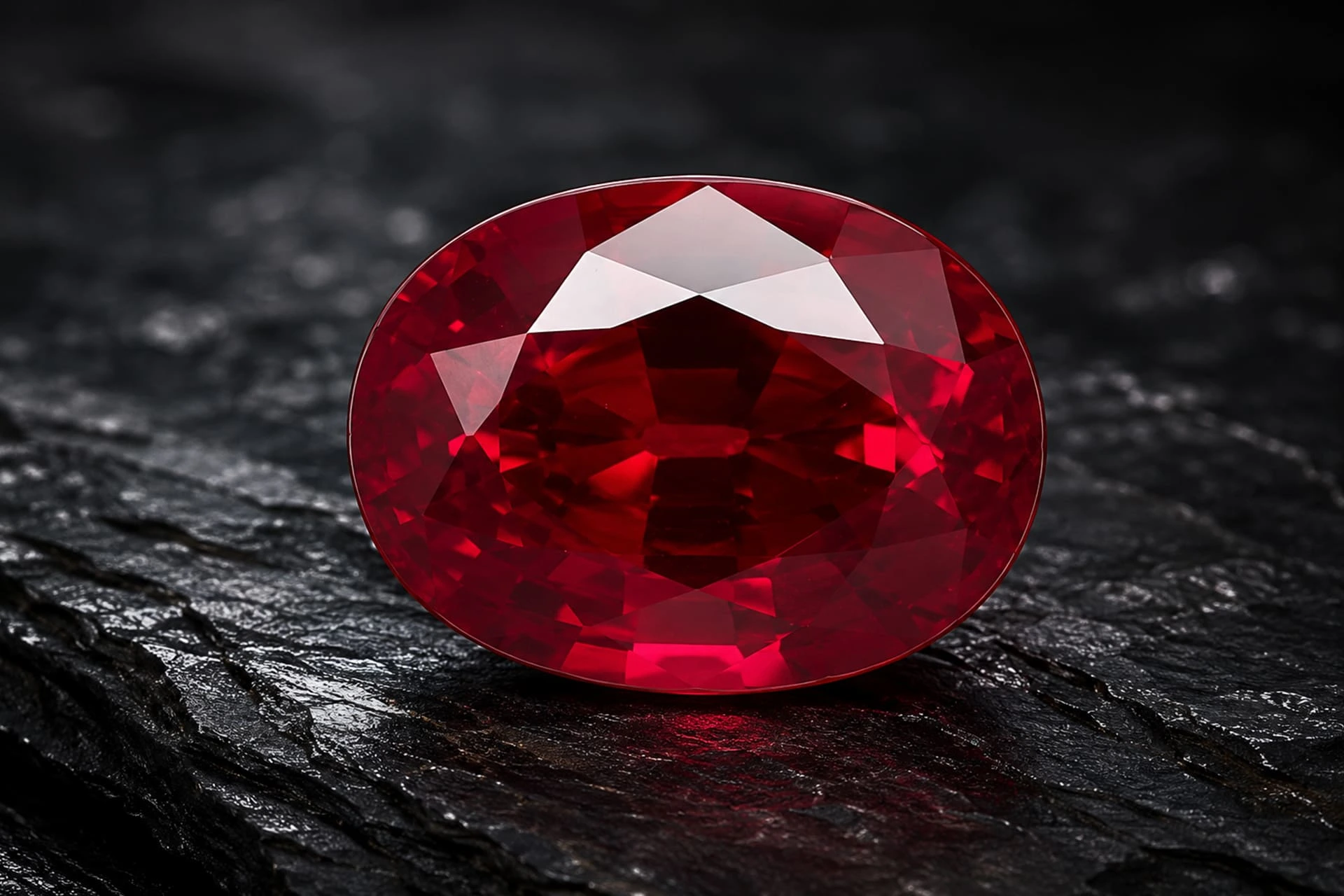
A lab grown ruby is made in a laboratory under controlled conditions, instead of forming naturally in the earth over millions of years. Ruby is the red type of corundum, a mineral made of aluminum oxide. Its red color mainly comes from small amounts of chromium. Since lab grown rubies use the same material, they have the same physical and chemical properties as natural rubies, not just a similar look.
In gemology, people often call lab grown rubies "synthetic rubies." It's important to clear up a common misunderstanding: synthetic does not mean fake. It just means the ruby was made in a lab but has the same chemical makeup and crystal structure as a natural ruby. This is what makes a real synthetic ruby different from red glass or other imitations that only look similar but do not have the same mineral qualities.
What Is a Natural Ruby?
Natural rubies form deep underground over long periods, only appearing when the right temperature, pressure, chemistry, and timing all align. Since each deposit forms under different conditions, natural rubies often have unique inclusions and growth patterns that reflect where they came from.
Natural rubies can look very different from one another. Some have a deep, vibrant red and are very clear, while others have many inclusions or need treatment before they can be used in fine jewelry. Because of these differences, finding a high-quality natural ruby with the perfect color, clarity, size, and cut is rare and often costly.
Lab Grown Ruby vs. Natural Ruby: What's the Real Difference?
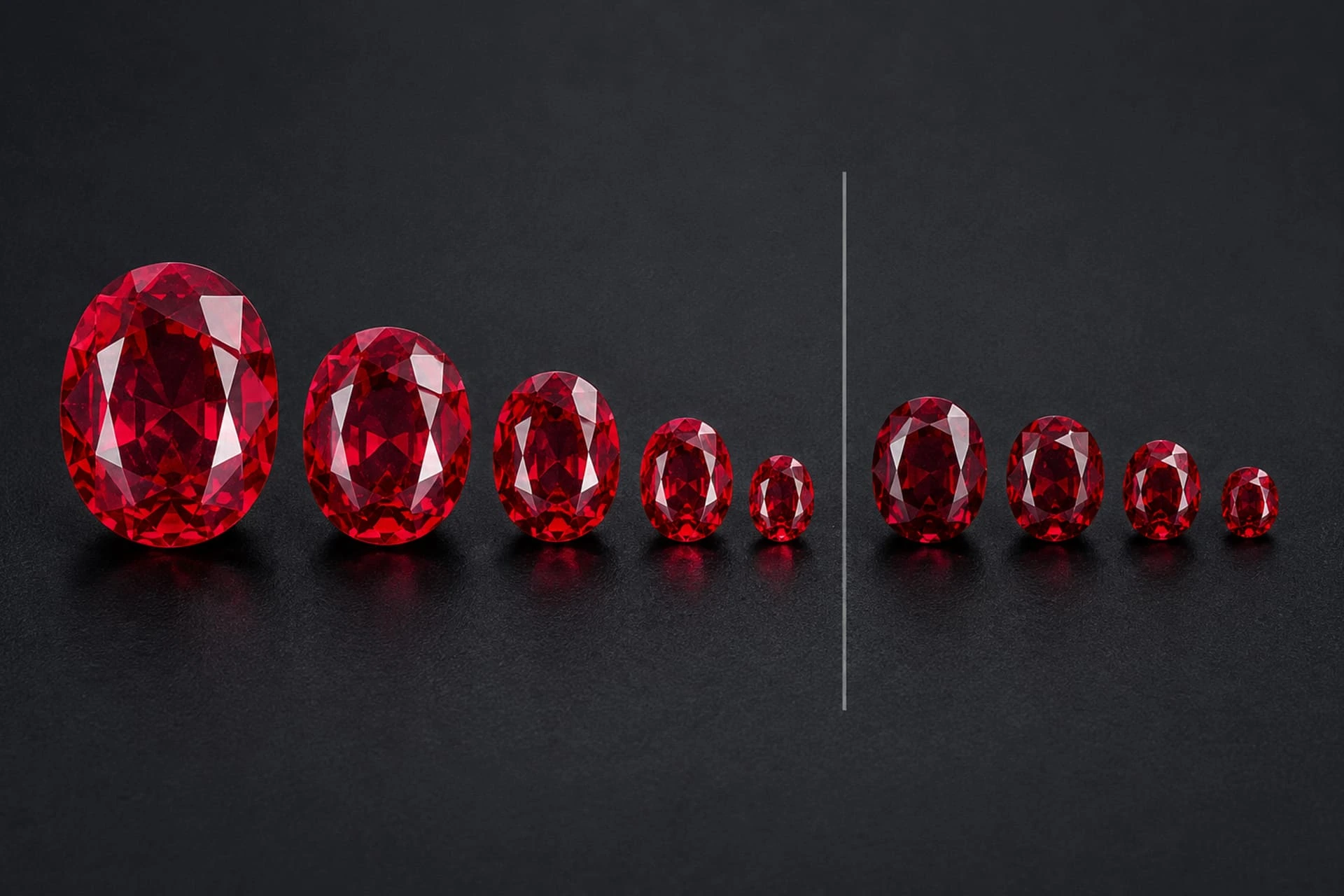
The main difference between these two stones is where they come from. Natural rubies form underground over time, while lab grown rubies are made in a lab using controlled methods. But where a ruby comes from is only part of the story. When picking a gemstone for jewelry, you should also think about how it looks, how easy it is to find, how consistent it is from one stone to another, what sizes are available, and how the prices compare.
Lab grown rubies usually have more even color, are easier to find in bigger sizes, and are much simpler to source if you need several matching stones. They also tend to cost less. Natural rubies, on the other hand, depend on what nature provides, so their color and clarity can vary a lot. Large, high-quality natural rubies are rare, and their prices can be much higher. So, lab grown rubies are a good choice for buyers who want value and flexibility, while natural rubies are best for those who appreciate the uniqueness and rarity of natural gems.
(1) More accessible pricing is one of the biggest advantages of a lab grown ruby, since fine natural rubies carry a high price largely because they're rare and difficult to find in good quality, whereas lab grown rubies are produced in controlled settings that let manufacturers create them as needed, without depending on the unpredictable supply of natural deposits, and that alone means buyers can often stretch their budget toward a larger gemstone, a more elaborate design, or a noticeably better cut.
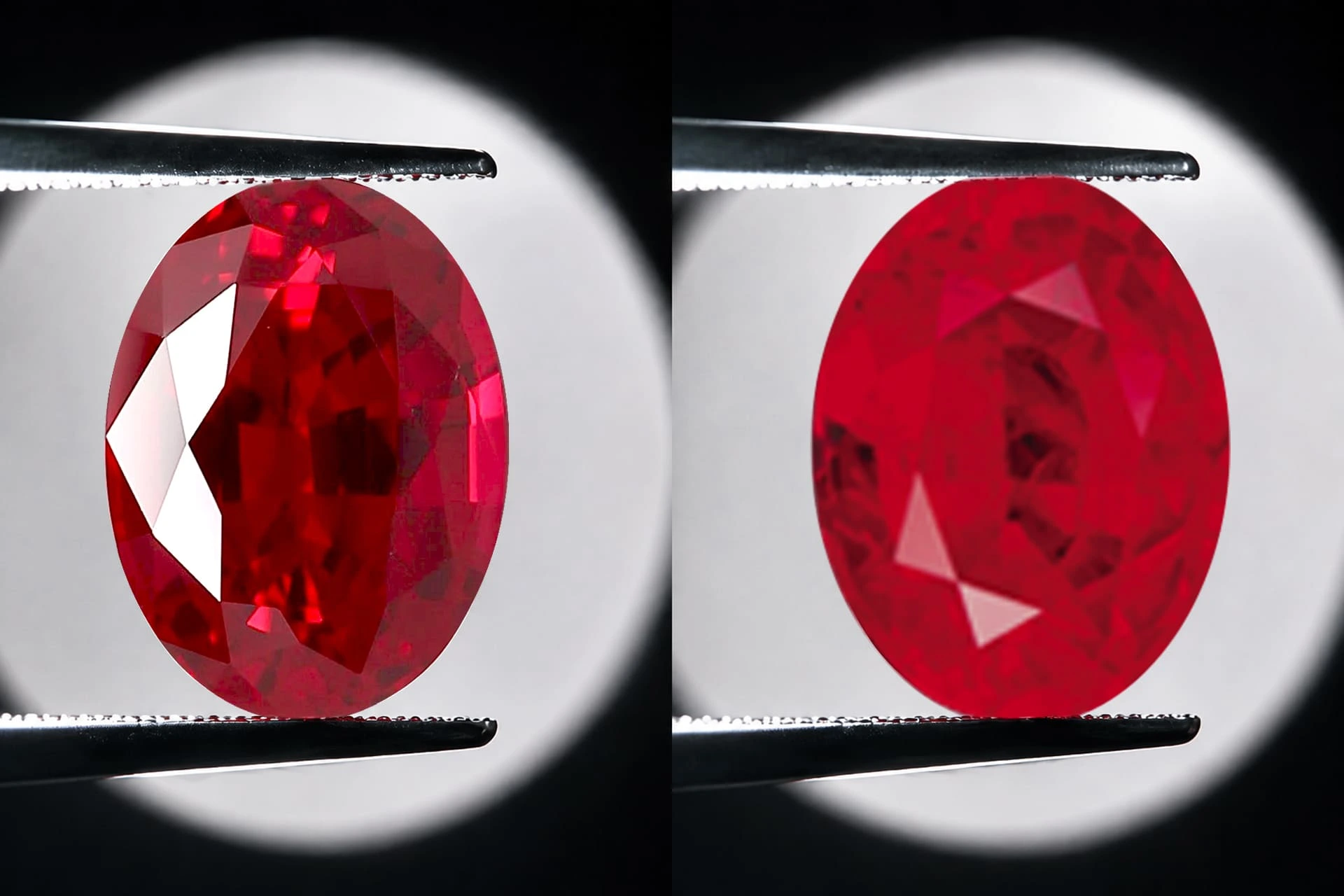
(2) More choice in size and shape follows the same pattern, because natural ruby supply is entirely dictated by what turns up in the ground, so finding several natural stones that match closely in color, clarity, size, and shape can be genuinely difficult, while lab grown rubies make this far easier thanks to their more consistent quality, which is especially useful for matching earrings, tennis bracelets, multi-stone rings, and repeated designs across a jewelry collection.
(3) More consistent color is another strong point, since each natural ruby crystal forms under its own unique geological conditions and can vary quite a bit in hue, tone, and saturation from stone to stone, whereas growing rubies in a lab allows for much tighter control over the process and generally produces more consistent color results, even though no two lab grown rubies are ever perfectly identical either.
(4) Larger stones being more accessible is another clear benefit, since big, beautiful natural rubies are hard to come by and almost always expensive when they do turn up, while lab grown rubies aren't limited in the same way by what nature happens to provide, opening up more realistic options for cocktail rings, statement pieces, large pendants, and custom engagement rings. And
(5) easier matching of gemstones is often where lab grown rubies really prove their worth: picture designing a pair of earrings that need two rubies with closely matching color and size, a task that can take a lot of time and effort with natural stones since each one forms entirely on its own, but one that lab grown rubies make considerably simpler, which is a major practical advantage for designers and manufacturers who want a cohesive look across an entire collection.
Understanding Synthetic and Flame Fusion Rubies
Many people are unsure about what "synthetic ruby" really means. In gemology, it describes a ruby grown in a lab that has the same chemical and crystal structure as a natural ruby. This is important, because a synthetic ruby is different from an imitation or simulant. For example, red glass might look like a ruby, but it is not made of corundum. A synthetic ruby, on the other hand, is real lab-grown corundum with the same properties as a natural ruby.
Flame fusion ruby is a well-known type of synthetic ruby made using the Verneuil method. In this process, powdered material is melted at very high temperatures and then slowly forms a crystal. This method lets ruby crystals grow quickly and has been important in the history of making synthetic gemstones. Flame fusion rubies often show certain features, like curved growth lines, tiny gas bubbles, and growth zones. Gemologists use these signs to tell that the ruby was made in a lab, but these details are usually seen only under a microscope.
Natural Inclusions vs. Lab Grown Growth Features
One of the biggest differences between natural and lab grown rubies is found inside the stone, not on its surface. Natural rubies often have inclusions that formed as the crystal grew underground. These can be minerals, fine rutile needles, small fractures, or slight color changes. Lab grown rubies, on the other hand, show growth features that depend on how they were made. These internal details help gemologists figure out where a stone comes from. However, having more inclusions does not always mean a natural ruby is better, and having fewer does not always mean a stone is synthetic. To identify a ruby correctly, it is important to consider all its features together, not just one in isolation.
Can You Tell a Lab Grown Ruby From a Natural One Just by Looking?
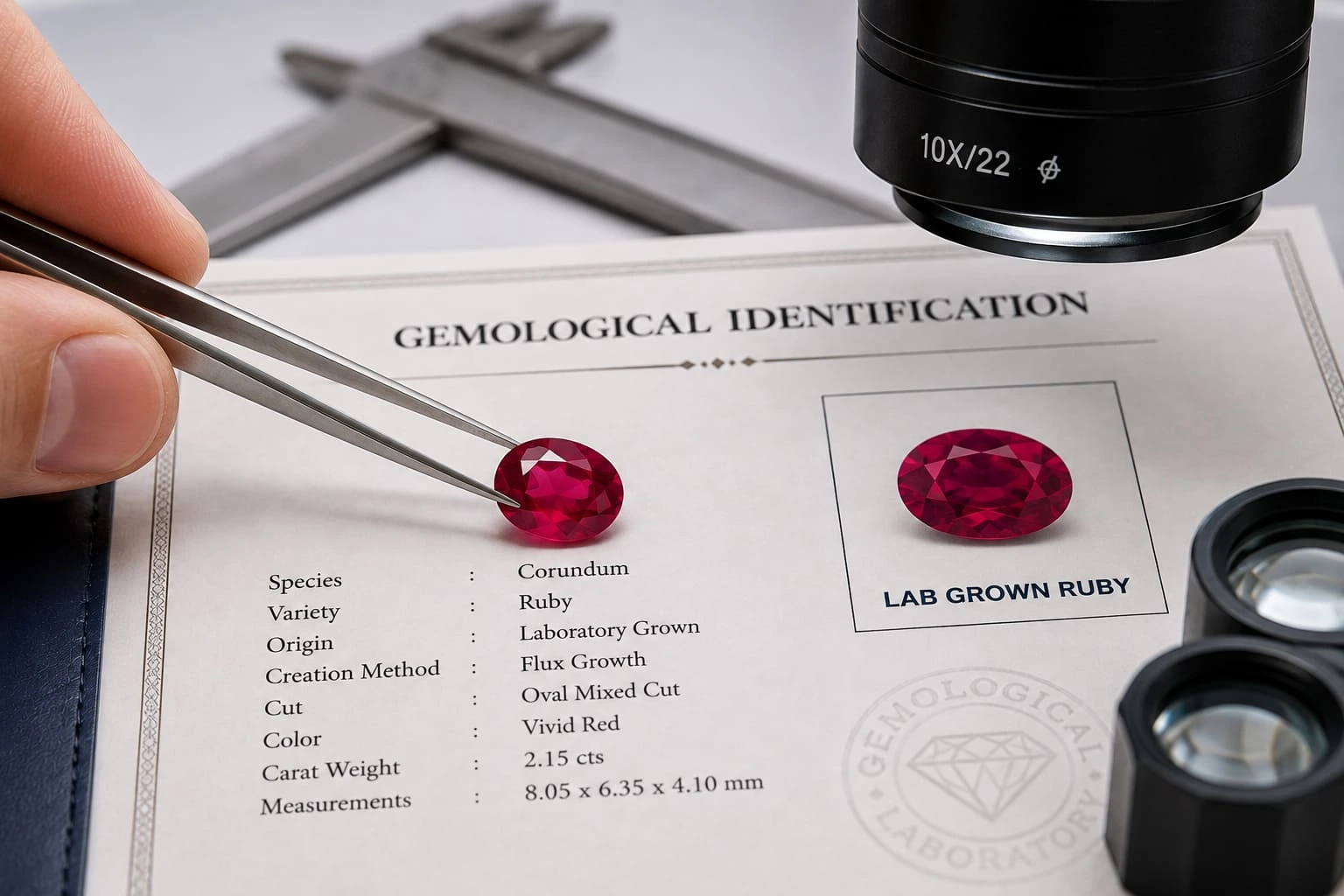
Usually, you can't tell just by looking. Lab grown rubies often look just as attractive as natural ones, and natural rubies themselves vary so much that it's hard to judge by appearance alone. Gemologists use things like growth patterns, internal inclusions, color zoning, fluorescence, optical properties, and spectroscopic tests to figure out where a ruby comes from. Sometimes, advanced lab tests are the only way to know for sure. That's why buyers shouldn't rely only on looks, price, or marketing when buying a valuable ruby.
Comparing Price: Lab Grown vs. Natural
Price is one of the clearest differences between lab grown and natural rubies. Lab grown rubies usually cost less because they are made in labs and are not limited by the rarity of mined stones. Natural rubies, on the other hand, can become much more expensive when they have qualities like strong color, great clarity, larger size, and little to no treatment. That is why the rarest natural rubies often sell for very high prices.
Lab grown rubies are priced differently. Instead of being based mostly on rarity, their price per carat depends on things like how they were made, their color, clarity, cut, carat weight, and overall quality. This means there is no single set price for all lab grown rubies. Prices still change based on how well the stone is made and its quality, but without the extra cost that comes from rarity like with natural rubies.
The main reason for the price difference is supply. Natural rubies depend on what is found in the earth, and high-quality stones, especially bigger ones with better color, are hard to find. Lab production gives makers much more control, so they do not have to rely on nature to meet demand. As a result, buyers often spend less on the gemstone itself and can use more of their budget for a bigger stone, better cutting, a fancier setting, or extra gems in the same piece.
Are Lab Grown Rubies Real Rubies, and Are They Worth Buying?
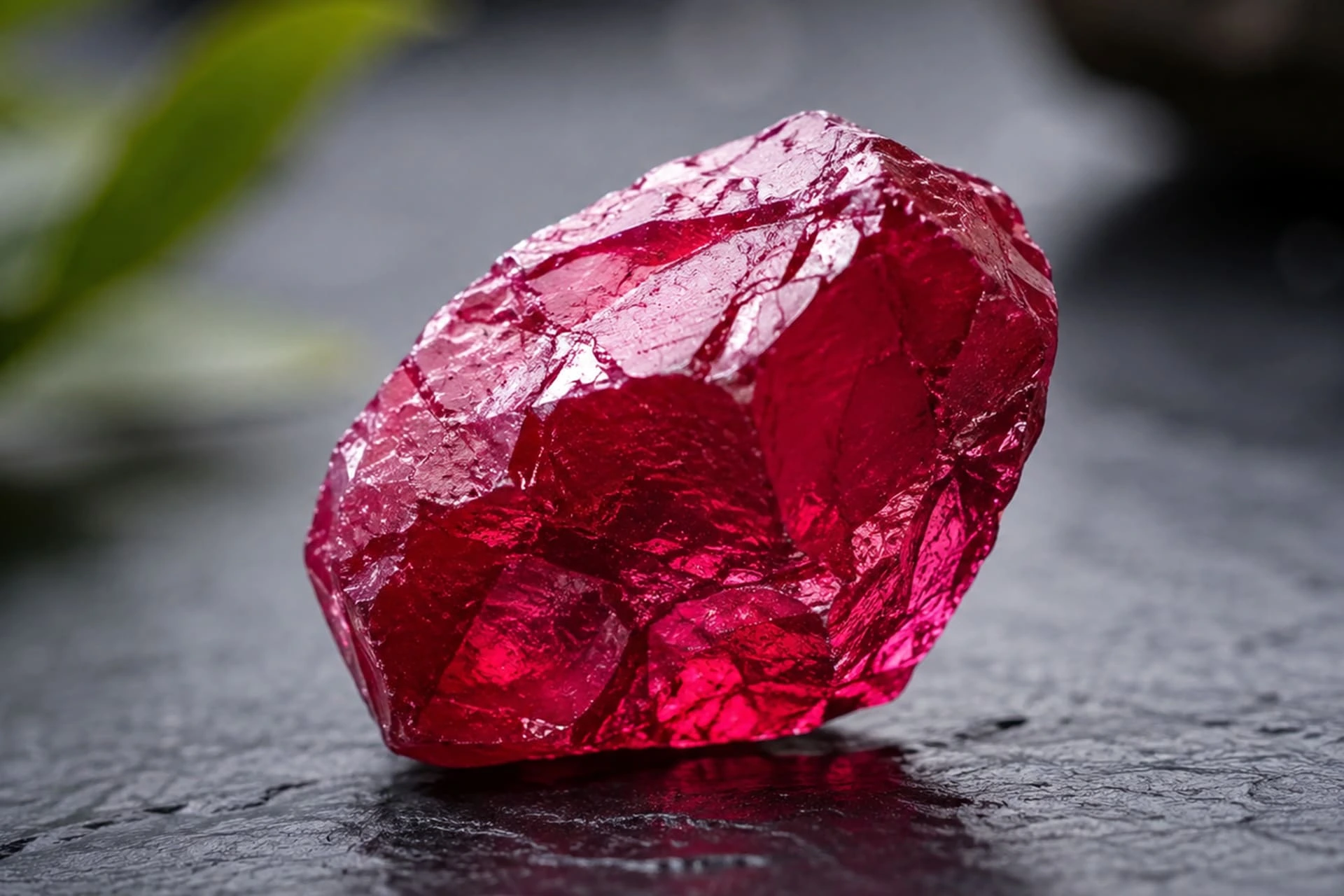
Yes, lab grown rubies are real rubies. They are not just red glass or a clever imitation. Lab grown rubies are made from the same corundum as natural rubies and have the same chemical makeup and crystal structure. The main difference is where they come from: natural rubies form in the earth over millions of years, while lab grown rubies are created in a controlled lab setting. So, if someone asks if lab grown rubies are "real," it depends on whether you mean how they were made or what they are made of.
When it comes to whether lab grown rubies are worth buying, the answer is usually yes, especially if you care more about beauty and value than where the stone comes from. Lab grown rubies have bright color, come in many sizes, are easy to find, and cost less than natural rubies. They are real rubies, not imitations. If you love the idea of owning something rare and formed by nature, a natural ruby might be better for you. But if you want a beautiful ruby without paying extra just because it is natural, lab grown rubies usually give you more for your money.
A Note on Treatment
When buying either natural or lab grown rubies, it’s important to think about treatments, as this topic often confuses buyers. Many natural rubies are heat-treated to improve their color and clarity, and some get other enhancements too. Lab grown rubies might also be treated, depending on how they are made and finished. So, don’t assume that natural rubies are always untreated, or that lab grown rubies are treated the same way. Good sellers should always share treatment details, especially for more expensive stones, because whether a natural ruby has been treated can make a big difference in its value.
So, Is Natural Ruby Actually Better Than Lab Grown Ruby?
It really comes down to what “better” means for you. If you care about geological rarity, natural formation, and owning a truly unique stone, then a natural ruby is the best choice. But if you prefer something more affordable, consistent, easy to find, available in larger sizes, and simple to match, then lab grown rubies are usually the more practical pick. The main point is that rarity and beauty are not the same, and a gemstone can look beautiful even if it isn’t rare.
Who Tends to Prefer Each Option
Choosing between the two depends on what you value most in a gemstone.
- A lab grown ruby is a good choice if you want the beauty of ruby without the high cost of rarity. It’s also ideal if you prefer a larger stone for your budget, need matching stones for a design, or want predictable sourcing for custom jewelry.
- Choose natural. A natural ruby is best if you value geological rarity, natural inclusions and growth patterns, and the story of a stone that formed on its own deep in the earth. is objectively "correct" — it's simply a matter of what you're hoping the stone will give you.
Final Thoughts
In the end, the choice between a lab grown ruby and a natural ruby depends on your personal priorities. Natural rubies are rare and expensive because they are limited to what the earth provides. Their origin, unique inclusions, and history make them special. Lab grown rubies have their own advantages. They are easier to find, always available, come in larger sizes, are easier to match, and usually cost less.
If you want the beauty and character of a red corundum ruby without paying more just for rarity, a lab grown ruby is a practical and rewarding choice. By focusing on color, cut, clarity, and size instead of origin, a lab grown ruby can be a beautiful centerpiece for modern jewelry and offer real value.