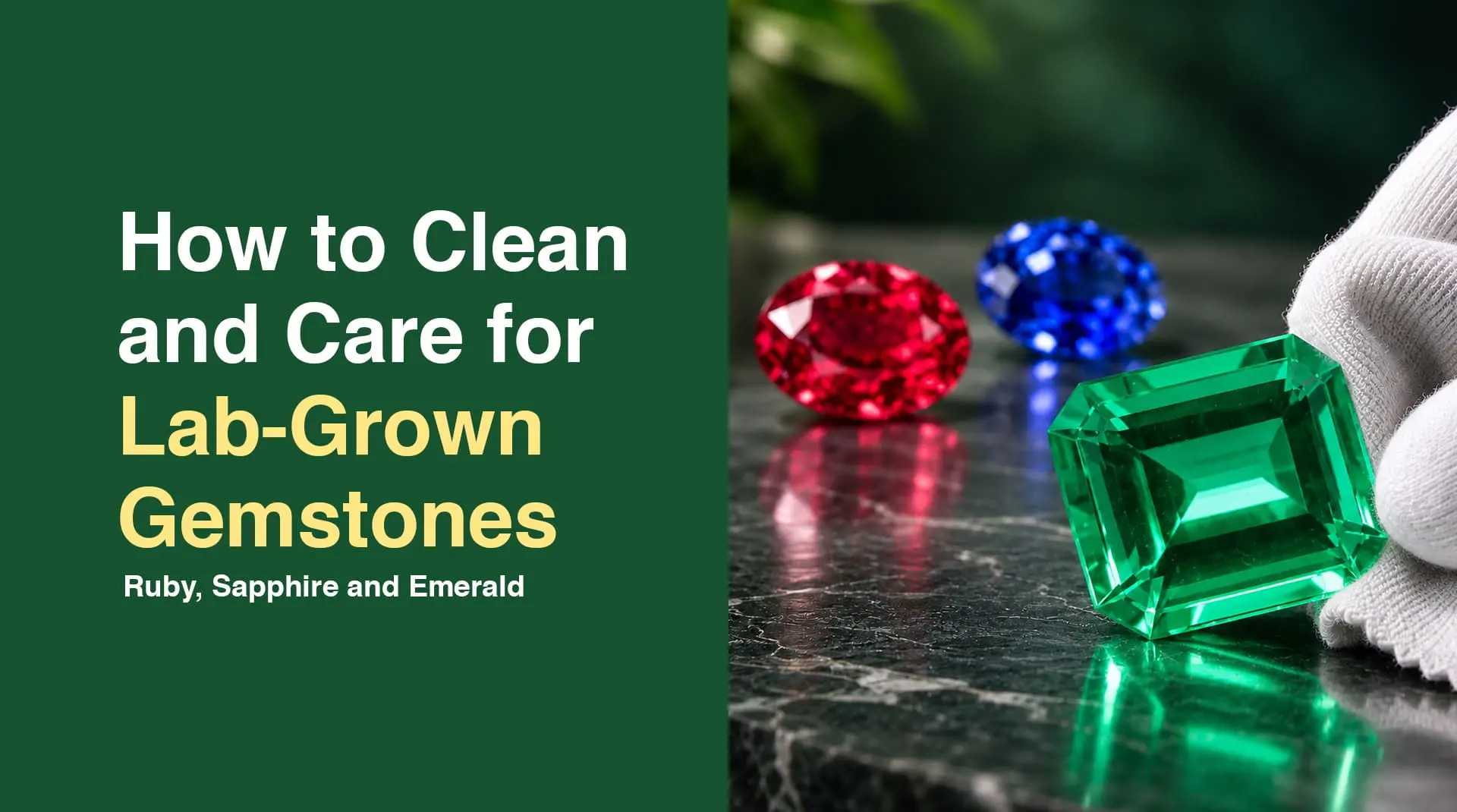
How to Clean and Care for Lab-Grown Gemstones: Ruby, Sapphire and Emerald
Lab-grown gemstones stand out for their bright colors, striking crystal shapes, and impressive looks. Lab-grown rubies, sapphires, and emeralds are especially popular because they offer the beauty of real gemstones but are created in a controlled setting.
If you own these gemstones, you should know how to care for them. Everyday things like dust, fingerprints, skin oils, and cosmetics can build up on their surfaces and make them look less bright.
Lab-grown gemstones have the same basic qualities as natural ones, but each type needs different care. Ruby and sapphire are tough enough for daily wear, but emeralds usually need gentler handling.
Learning how to clean, handle, and store these gemstones properly will help them look great for a long time.
This guide shows you how to clean lab-grown gemstones, explains the differences in caring for ruby, sapphire, and emerald, and shares tips to keep them looking their best.
Understanding the Care Requirements of Lab-Grown Gemstones
Before you clean any gemstone, it helps to know its basic physical properties.
Lab-grown gemstones are made with special lab techniques that produce real gemstone materials. They have the same mineral makeup and crystal structure as natural stones. So, how you care for them depends more on the gemstone type than on whether it’s lab-grown or natural.
There are three main things to consider when caring for a gemstone:
- Hardness: Measures how resistant a gemstone is to scratching.
- Toughness: Describes how well a gemstone withstands impacts, chips, and fractures.
- Stability: How a gemstone responds to heat, light, and chemicals.
Lab-grown ruby and sapphire belong to the corundum mineral family and have a Mohs hardness of 9. Lab-grown emerald belongs to the beryl family and has a hardness of approximately 7.5–8.
But just because a gemstone is hard doesn’t mean it can’t break. Even hard stones can chip or crack if they’re hit, especially near sharp edges or where small cracks already exist inside.
It’s also important to think about treatments. Lab-grown doesn’t always mean untreated. Some stones go through extra steps during or after they’re made, and these treatments can affect how you should clean them. Always check your gemstone's information before choosing a cleaning method.
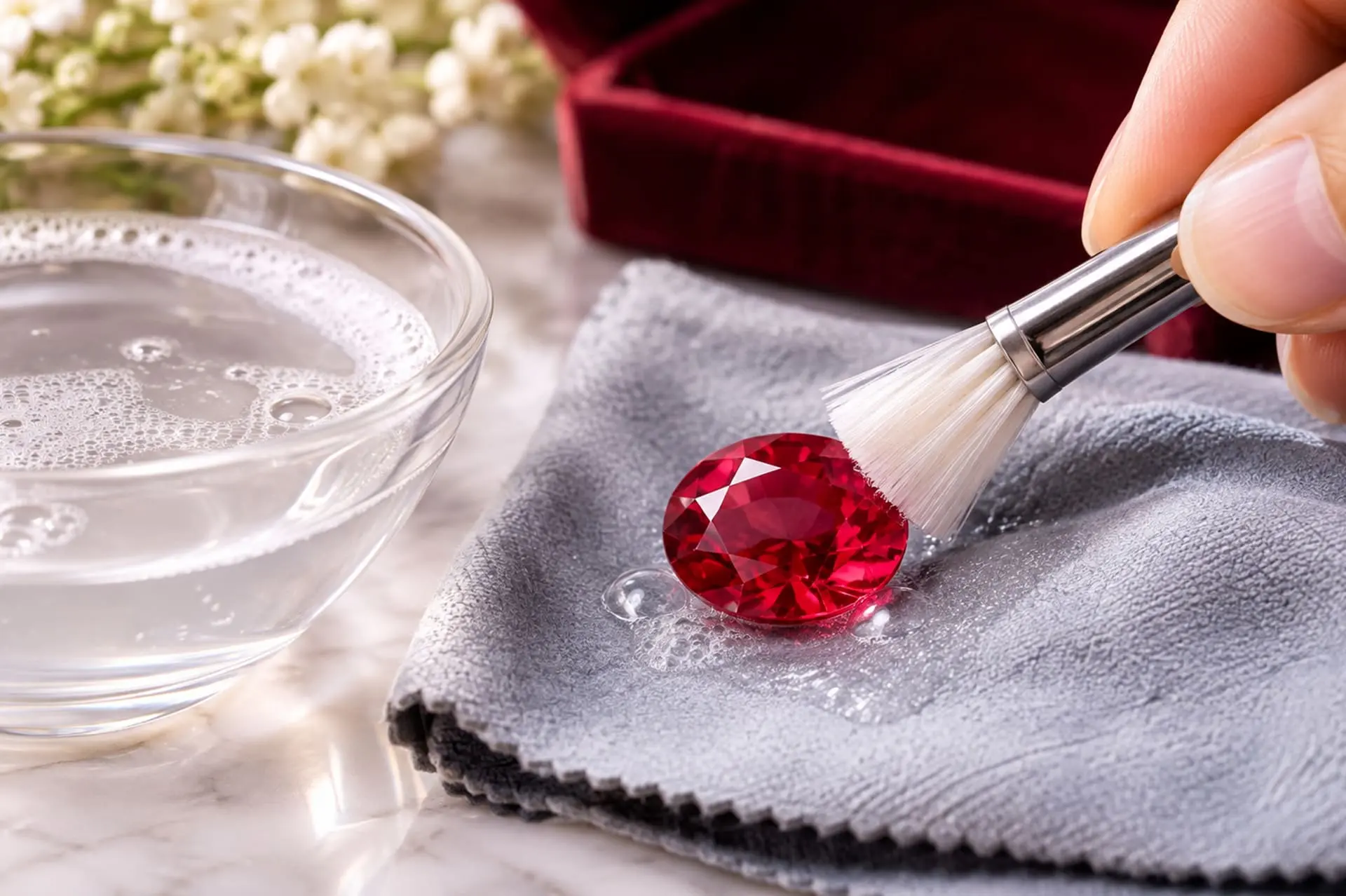
How to Clean and Care for Lab-Grown Ruby
Lab-grown rubies are known for their rich red color, excellent hardness, and durability. They're a popular choice for people who appreciate vibrant colored gemstones and want a stone that can withstand regular handling.
Ruby has a Mohs hardness of 9, so it resists most everyday scratches. Still, regular cleaning helps remove buildup and keeps it looking shiny.
Best Cleaning Method for Lab-Grown Ruby
For most lab-grown rubies without special treatments, you can clean them easily with mild soap and lukewarm water.
Follow these steps:
- Prepare the cleaning solution: Fill a small bowl with lukewarm water and add a few drops of mild, non-abrasive liquid soap.
- Inspect the gemstone: Check the ruby for visible cracks, loose material, or signs of damage before cleaning.
- Clean the surface: Use a very soft-bristled brush to gently remove dust, dirt, and accumulated residue.
- Pay attention to the edges: Carefully clean around the gemstone’s facets, where small particles can collect.
- Rinse thoroughly: Use a separate bowl of clean water to remove any remaining soap.
- Dry properly: Gently pat the gemstone with a soft, lint-free microfiber cloth.
Don’t press too hard when brushing. You don't need to use too much force, which could make things worse if the stone already has cracks or damage.
Tips for Maintaining Lab-Grown Ruby
To keep a lab-grown ruby looking its best:
- Avoid exposing the gemstone to strong household chemicals.
- Keep it away from abrasive cleaning powders.
- Avoid sudden temperature changes.
- Handle the gemstone carefully to prevent accidental impacts.
- Use a soft cloth to remove fingerprints and surface oils.
- Store it separately from other gemstones.
These simple practices help maintain a ruby's polished surface and attractive appearance.
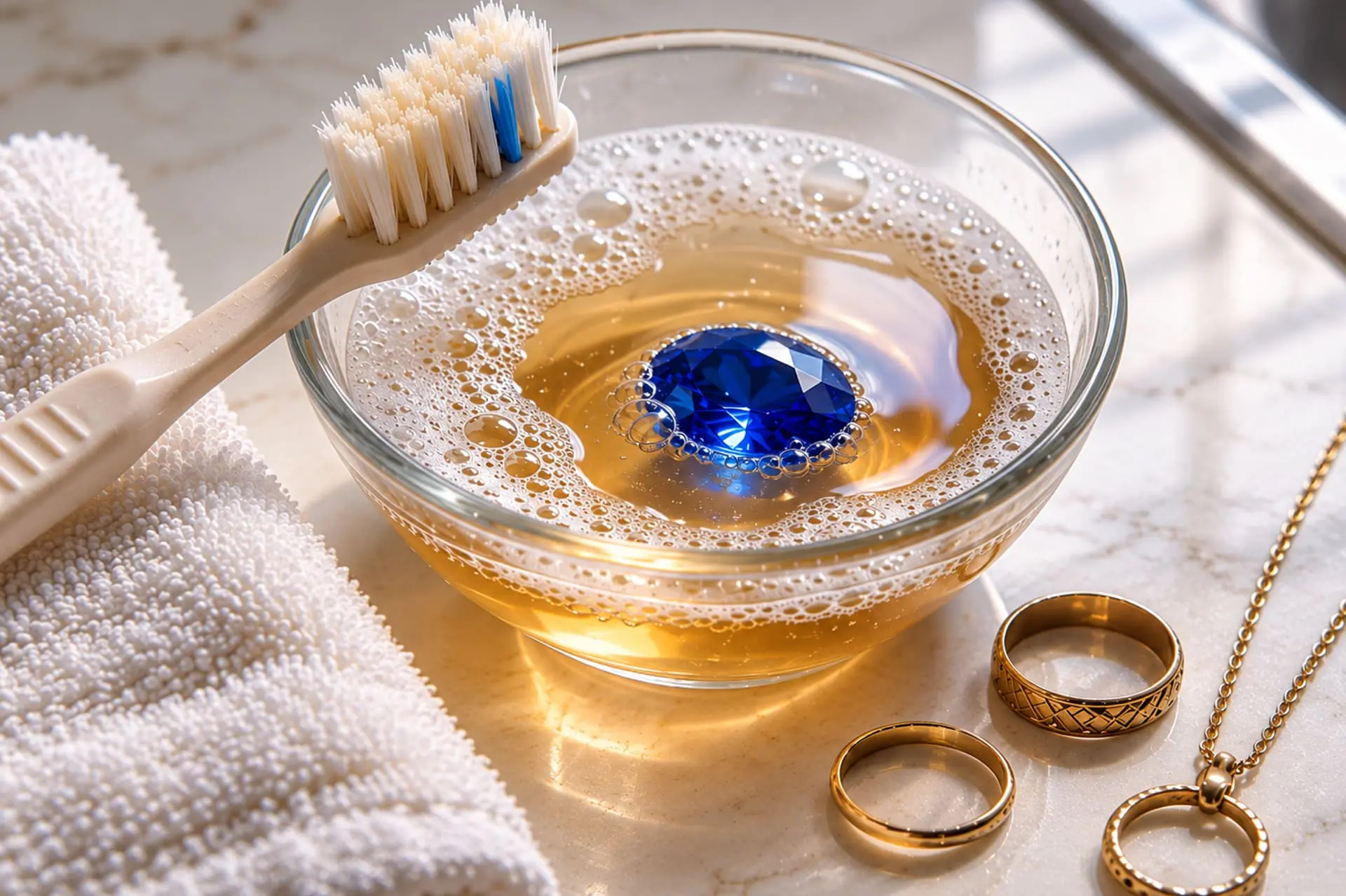
How to Clean and Care for Lab-Grown Sapphire
Lab-grown sapphire is also a strong gemstone, best known for its beautiful blue color, but it comes in other colors too.
Sapphire, like ruby, is part of the corundum family and has a Mohs hardness of 9. This makes it hard to scratch, but it can still be damaged if hit.
Best Cleaning Method for Lab-Grown Sapphire
Most sapphires without sensitive treatments can be cleaned using lukewarm water and mild soap.
Here is a practical cleaning routine:
- Prepare a small bowl of lukewarm water with a few drops of mild soap.
- Briefly place the sapphire in the solution.
- Use a soft brush to gently remove dust and residue from the surface.
- Carefully clean around the facets to remove accumulated particles.
- Rinse the gemstone using clean water.
- Dry it using a soft microfiber cloth.
Cleaning the surface well helps your sapphire keep its shine and sparkle.
Tips for Maintaining Lab-Grown Sapphire
Even though sapphire is very tough, it’s still important to handle it with care.
- Avoid harsh cleaning chemicals.
- Keep the gemstone away from abrasive materials.
- Avoid placing it directly against harder gemstones.
- Protect it from accidental knocks and impacts.
- Use a separate soft storage compartment.
- Look for any visible damage before and after you clean your sapphire.
Some sapphires have treatments that affect how you should clean them. If your sapphire is fracture-filled, cavity-filled, or dyed, avoid using harsh cleaning methods.
That’s why gentle hand cleaning is usually best, unless you know your sapphire can handle a different method.
How to Clean and Care for Lab-Grown Emeralds
Lab-grown emeralds are loved for their deep green color and unique inclusions.
Emeralds need more careful care than rubies or sapphires. They have a Mohs hardness of about 7.5 to 8, but they’re not as tough, so they can chip or crack more easily if bumped.
Some emeralds have small cracks inside or have been treated to look clearer. Oils, resins, and other fillers used in these treatments can be damaged by the wrong cleaning methods.
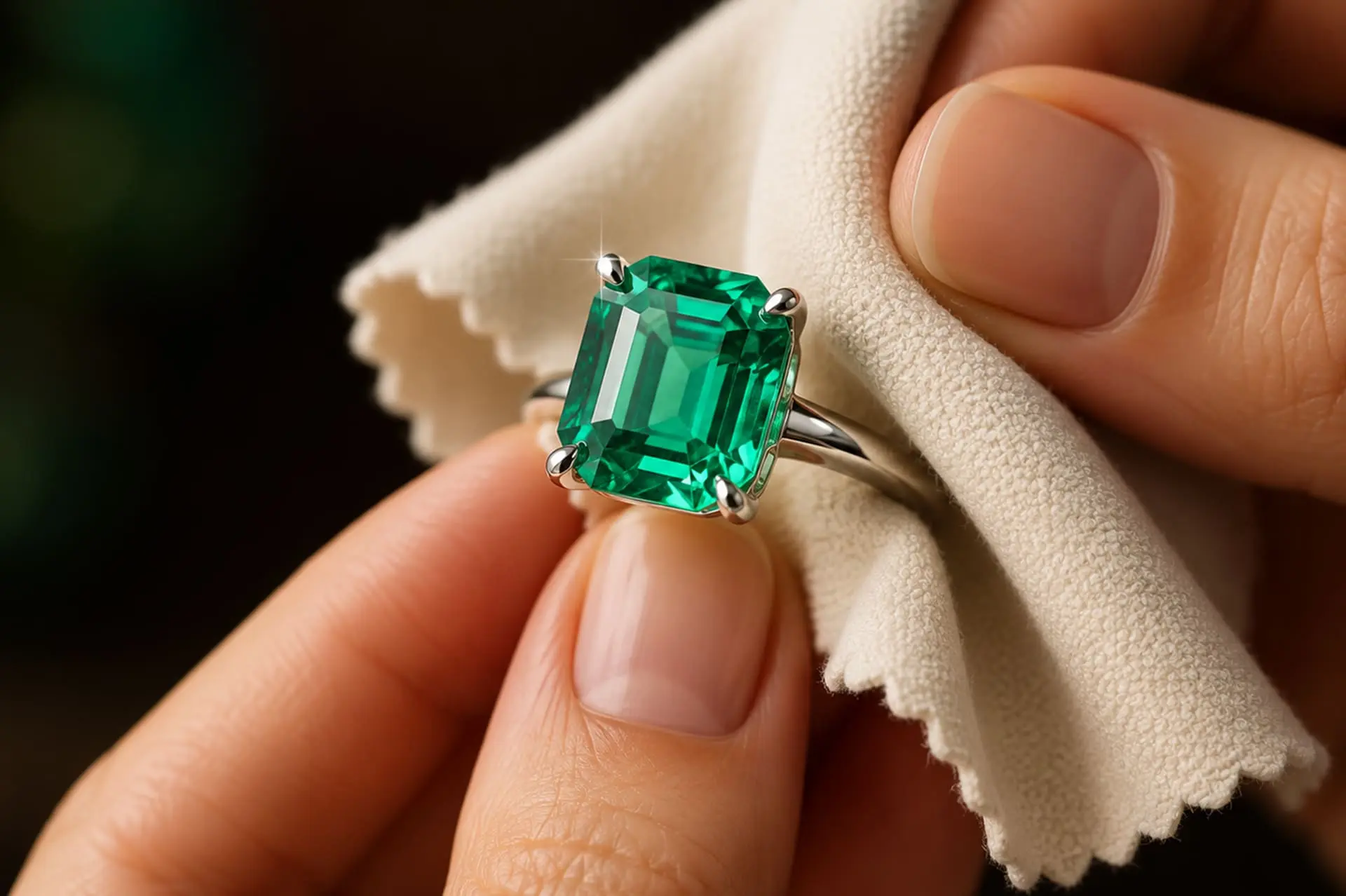
Best Cleaning Method for Lab-Grown Emerald
Gentle hand cleaning is the preferred approach, especially when the gemstone's treatment history is unknown.
Follow these steps:
- Prepare lukewarm water with a small amount of mild liquid soap.
- Moisten a soft microfiber cloth with the cleaning solution.
- Gently wipe the emerald’s surface to remove fingerprints, dust, and residue.
- Use an extremely soft brush only when necessary.
- Rinse carefully with clean water.
- Pat the gemstone dry using a soft, lint-free cloth.
Don’t scrub hard, soak the emerald for too long, or press too much around any visible cracks or inclusions.
Important Precautions for Lab-Grown Emerald
Lab-grown emeralds require a few additional precautions:
- Avoid ultrasonic cleaning unless a qualified gem professional confirms that the particular stone is suitable.
- Never steam-clean without professional confirmation.
- Keep the gemstone away from strong solvents and alcohol-based cleaning solutions.
- Avoid excessive heat and sudden temperature changes.
- Handle the gemstone carefully to prevent accidental impacts.
- Store it separately from harder gemstones.
These steps help protect your emerald’s surface, its internal structure, and any treatments it might have.
Cleaning Products You Should Avoid
The wrong cleaning products can harm the surface, treatments, and appearance of your gemstones.
Whether you own a lab-grown ruby, sapphire, or emerald, avoid using the following materials without professional guidance:
- Bleach and strong household chemicals
- Strong chemicals can react with certain gemstone treatments and may damage other materials present in a finished gemstone.
- Abrasive powders and rough brushes
- Baking soda, toothpaste, and abrasive cleaning powders can scratch nearby materials and leave unwanted marks. Rough brushes can also damage delicate settings.
- Vinegar and acidic solutions
- Acidic cleaning solutions, including lemon juice, may damage certain fracture-filling materials. Do not use them as routine gemstone cleaners.
- Alcohol and chemical solvents
- Alcohol, acetone, and similar solvents may affect oils, resins, coatings, or other treatments.
- Extremely hot water
- Avoid boiling water and sudden temperature changes, particularly when a gemstone contains fractures or treatment materials.
- The safest general starting point is mild soap, lukewarm water, and a soft cloth, as long as the gemstone’s condition and treatment allow it.
Can You Use Ultrasonic Cleaners on Lab-Grown Gemstones?
Ultrasonic cleaners use high-frequency vibrations to remove dirt and other particles from gemstones.
These machines can help with some gemstones, but they aren’t right for every lab-grown stone.
For ruby and sapphire, ultrasonic cleaning may be appropriate for some untreated, heat-treated, and lattice-diffusion-treated stones. However, fracture-filled, cavity-filled, or dyed stones require gentler cleaning.
Emeralds need extra caution because vibrations can stress existing fractures, and heat from cleaning equipment can affect certain filling materials.
For regular care, it’s safest to clean by hand with mild soap, lukewarm water, and a soft cloth. Only use professional cleaning machines if you’re sure your gemstone and its treatments can handle it.
How to Store Lab-Grown Gemstones Properly
Storing your gemstones properly also helps keep them in good shape.
Even if you’re not cleaning or wearing your gemstones, they can still get damaged if they bump into other hard things.
Follow these storage practices:
- Keep each gemstone in an individual soft pouch or protective compartment.
- Avoid storing rubies, sapphires, and emeralds together without separation.
- Keep gemstones away from excessive heat and direct sources of damage.
- Use a padded surface when placing loose gemstones down.
- Avoid leaving gemstones exposed on hard surfaces.
- Handle faceted gemstones carefully, especially around their corners and edges.
Ruby and sapphire are harder than emerald, so if you store them together without protection, the emerald could get scratched.
A storage box with separate compartments is a good way to keep your colored gemstones safe and organized.
When Should a Lab-Grown Gemstone Be Professionally Inspected?
Cleaning your lab-grown gemstones at home keeps them looking good, but sometimes you’ll need professional help.
Consider consulting a qualified gemologist or gemstone professional when:
- You notice a new chip or visible fracture.
- The gemstone develops unusual surface marks.
- Its appearance changes after exposure to chemicals or heat.
- You are unsure about its treatment history.
- Dirt remains trapped in difficult-to-reach areas.
- You want to use an ultrasonic or steam-cleaning machine.
A professional can check your gemstone, spot any treatment issues, and suggest the best way to clean or care for it.
Don’t try to polish, fix, or remove marks from a gemstone yourself.
Key Takeaways
- Lab-grown ruby and sapphire are very hard but still need protection from impacts.
- Lab-grown emerald requires more careful handling because it is more vulnerable to chipping and fractures.
- Mild soap, lukewarm water, and a soft cloth are suitable for routine cleaning when the gemstone’s condition permits.
- Avoid harsh chemicals, abrasive products, and excessive heat.
- Do not use ultrasonic or steam cleaners unless you confirm they are suitable.
- Store each gemstone separately to prevent accidental scratches and damage.
- Always consider the gemstone’s treatment information before selecting a cleaning method.
Conclusion
Caring for lab-grown gemstones does not require complicated equipment or expensive cleaning products. Understanding the individual characteristics of ruby, sapphire, and emerald is the most important part of maintaining their appearance.
Lab-grown ruby and sapphire don’t scratch easily, so they’re pretty simple to care for. Lab-grown emeralds need softer cleaning and extra protection from bumps, heat, and harsh cleaning tools.
If you clean your gemstones the right way, avoid harsh products, and store them carefully, you’ll help them stay bright and beautiful for years.
At DEDIAM, we think knowing how to care for your gemstones helps you enjoy them even more. Whether you choose a lab-grown ruby, sapphire, or emerald, caring for it means you’ll enjoy its color, clarity, and craftsmanship for years to come.